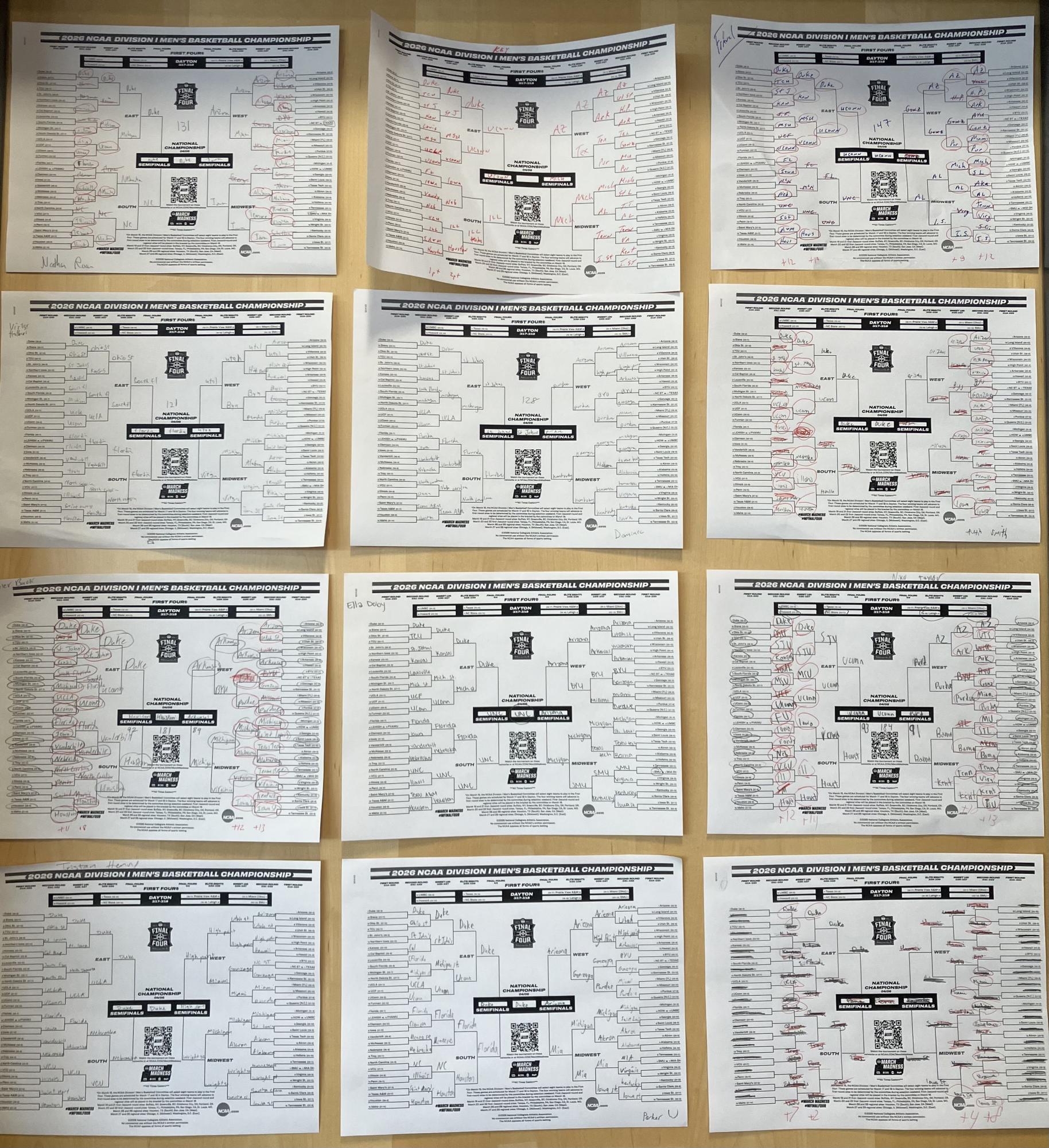
March Madness, one of the most exciting events in sports, is a 68-team tournament that captivates fans across the nation for weeks. This year’s tournament has wrapped up, crowning a champion from the Big Ten: the Michigan Wolverines.
College basketball is a sport cherished by many, and its unique 67-game tournament structure is the focal point each March. Fans attempt to create the first perfect bracket while also watching to see which team becomes the next Cinderella story, ensuring the tournament always has some sort of madness to it.
This year, Big Ten champion Michigan emerged on top, securing a six-point win to claim its second national championship. Led by star players Yaxel Lendeborg and Elliot Cadeau, the Wolverines faced little resistance in the final against the UConn Huskies, coached by Dan Hurley.
“Michigan was the best team. I mean, they beat every team by 20 points every game…I think Michigan was in a tier of their own,” junior State High basketball player Lucas Starks said.
Michigan was a talented team, but another key factor in its success was its roster construction. All five starters were transfers from other schools, highlighting how NIL and the transfer portal have reshaped college basketball and the tournament.
“I think it made teams better, but I think it affected the culture of college basketball,” sophomore State High basketball player Chase Rhoades said.
“You go to school, and commit to it, it’s not the NBA, you need to stay loyal…I think it broke a little bit of loyalty,” Starks said.
With the rise of NIL, college basketball programs are beginning to take on a more business-like approach, with some schools investing millions of dollars to attract top talent. According to Front Office Sports, Michigan utilized more than $10 million in NIL resources on the way to its championship.. With more focus being put on the importance of NIL to recruit, programs that are unwilling or unable to spend may struggle to remain competitive.
Beyond the championship run, the 2026 tournament featured multiple epic upsets and close games. Early into the first round, No. 12 seed High Point, led by shooting specialist Chase Johnston, defeated No. 5 seed Wisconsin. No. 11 seed VCU won in an overtime thriller to upset No. 6 seed North Carolina, which was missing star freshman Caleb Wilson. Kentucky also edged Santa Clara in a back-and-forth finish.
Later in the tournament, Dylan Darling scored at the buzzer to eliminate Kansas in the second round, while UConn completed a comeback victory over Duke, finished off by a late play from Braylon Mullins.
These games helped maintain the excitement fans expect from March Madness, while also showcasing some of the nation’s top talent. Duke forward and Wooden Award winner Cam Boozer dominated throughout the tournament, averaging a double-double. Kansas guard Darryn Peterson impressed with his scoring ability, while BYU freshman AJ Dybantsa established himself as one of the nation’s top scorers, averaging nearly 26 points per game.
Another standout performer was Darius Acuff Jr., who averaged 30 points per game during the tournament. Despite North Carolina’s early exit, Wilson also made an impact during the season, averaging close to a 20-point double-double before suffering a season-ending injury at the beginning of March.
“Obviously, we saw a lot of lottery picks in the upcoming draft, which is going to be very solid…we saw good performances from AJ Dybantsa, and consistency from Michigan stars like Lendeborg showing how stacked these games were,” Starks said.
March Madness lived up to expectations this year, and with many star players returning and the transfer portal more active than ever, college basketball is entering a new era. Whether that change is for better or worse, as long as there is March Madness, the madness of college basketball will always stay.