On April 24th 2025, President Trump signed an executive order jumpstarting the move to open the ocean to deep-sea mining, an effort still ongoing today. Sea floor mining will give the US access to minerals, including nickel, cobalt, copper, and titanium, but cause substantial environmental harm in the process.
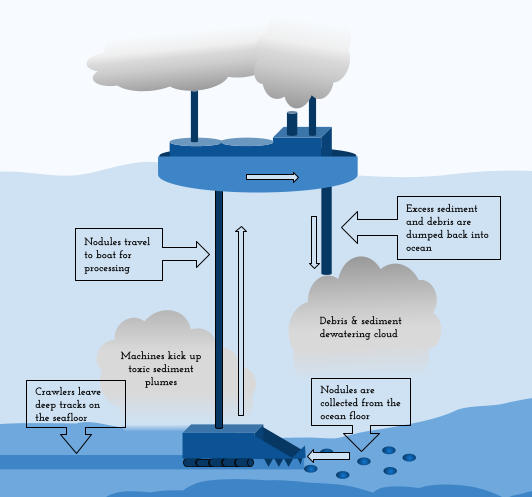
Deep-sea mining is the process of collecting the polymetallic lumps on the ocean floor to use for mineral content. To do this, machinery weighing as much as a blue whale moves across an area of the sea floor, scooping up the nodules as it goes. These nodules nurture the environment and marine life around them and are full of minerals necessary for phones, batteries, and defense technologies. They also take millions of years to form; once they are gone, they cannot be replaced.
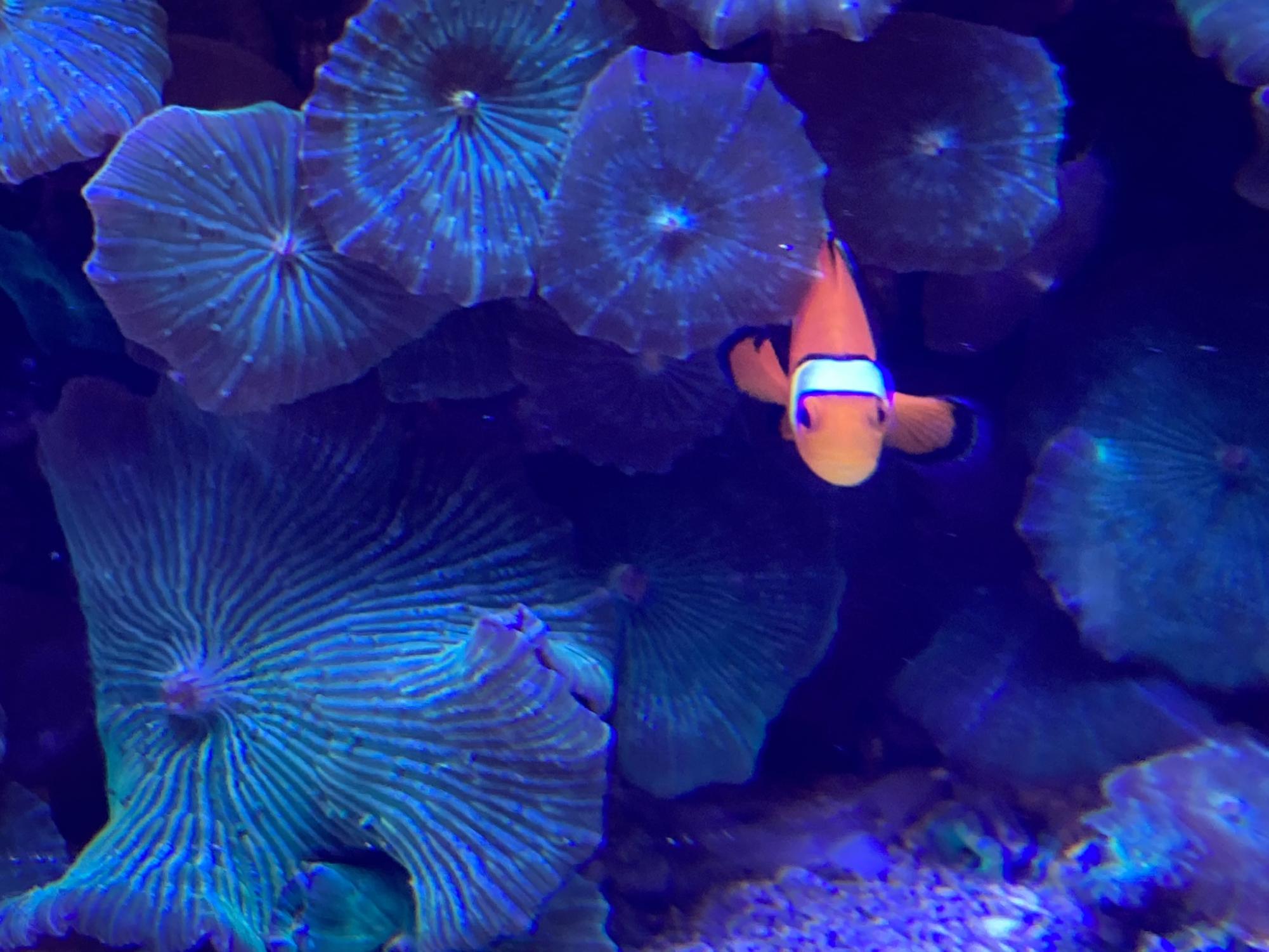
As the heavy machines, called crawlers, move through the sea, they crush coral ecosystems and leave behind deep tracks. The crawlers kick up toxic sentiments, leaving plumes of pollution in their path. These can stretch for miles, affecting not just the mined areas, but the surrounding sea too.
“Coral ecosystems specifically are already facing a major decline, so intentionally doing more to harm those spaces is going to get rid of a lot of biodiversity and marine life,” Environmental Club President senior Kazie Dingwell said.
“I think ocean mining is harmful for the ocean because it ruins coral reefs…so I think we should focus on alternative methods,” freshman Emmie Schwab said.
The Trump administration has mapped “priority areas” to mine, parts of the seabed with abundant minerals. On that list are 30,000 miles of ocean around American Samoa, Guam, the Mariana Islands, and even the Mariana Trench.
The moon is more explored than the Mariana Trench. New animals are discovered with each trip down, and there may be hundreds more that are undiscovered. Mining in the area could destroy entire species before they’re ever seen.
Deep-sea mining has been attempted before. Even short trials have left devastating effects. Take the Blake Plateau, for example. Most of the Blake Plateau is home to the world’s largest known deep-sea coral reef ecosystem, except for the 19 square miles where ocean mining was tested. Even nearly 50 years later, the effects of this month-long test are still there.
In the 1970s, the US conducted its first deep-sea mining experiment on a small coral-filled patch of ocean on the Blake Plateau, located just off the coast of North Carolina and Florida. The crawlers moved across the ocean floor, crushing coral ecosystems, releasing toxins into the water, and sucking up nutrients along with the mineral clumps.
Today, little remains in the area but the tracks the machines left behind. There is no coral; the fish that once relied on the mineral deposits have not returned. Some claim ocean areas will bounce back after being mined, but after 5o years, areas of the Blake Plateau look as desolate as they did the day the trial ended.
The Blake Plateau experiment lasted only a month on a small piece of ocean. If there are plans to open much larger areas of the ocean to mining over a much longer period of time, that leaves many questions on the table: What will happen to the ocean’s ecosystems and biodiversity?
“If there aren’t protected spaces in the ocean, this could get out of hand really fast,” Dingwell said.
It’s easy to wonder why we should care. Like many things, it’s often difficult to understand how something so far away can impact us.
“With every drop you drink, with every drop you take, you are connected to the sea,” marine biologist Sylvia Earle said in her 2009 TED talk.
Most of Earth’s water is ocean. The ocean produces 50 to 80 percent of all the oxygen on Earth. This oxygen is produced by the microscopic life in the sea. Life that depends on coral and fish cannot survive in water polluted and stripped of nutrients from deep-sea mining.
Without a healthy ocean, there would be no oxygen. Without oxygen, we couldn’t survive. We depend on the health of the ocean, but the health of the ocean depends on us. To survive sustainably, we cannot take actions that deliberately harm the sea, and that includes deep-sea mining.