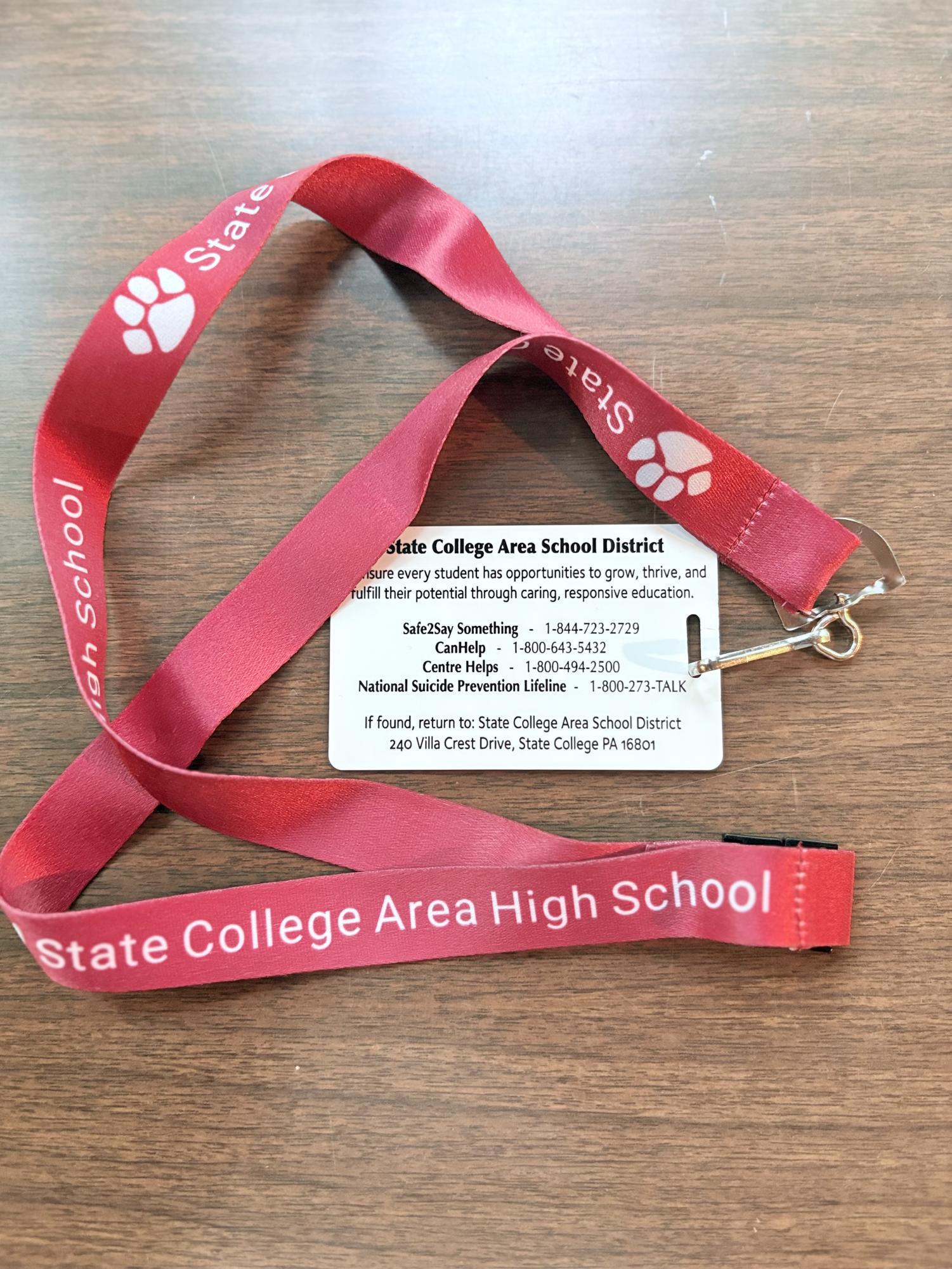
In light of recent safety concerns for State High, administrators have introduced schoolwide ID cards, where every employee and student in the building is assigned an ID for security verification upon entrance.
While administrators state the new policy keeps certain safety concerns at bay, some students feel differently regarding the IDs, with many encouraging the IDs to be experimental rather than a permanent part of school safety measures.
But what does this mean for general public safety in State High, and why does it matter?
First, State High isn’t the only Pennsylvania school to implement IDs as a safety measure. Schools in the Central York School District, just two hours away from State College, have stricter ID measures in place, including self-expiring badges assigned to students and visitors.
When asked about general campus safety, State High Student Council Secretary Dasha Nekrutenko felt strongly about safety policies in schools.
“I believe it’s necessary to have some sort of identification that’s accessible, physical, and unique,” Nekrutenko said. “I understand it’s sometimes a little annoying to wear, because it’s dangling there. “I’m a person who gets overstimulated a lot, but there are different ways to wear it.”
Nekrutenko also discussed the benefits of increasing awareness around the potential for gun violence in school.
“I think there should be more awareness regarding gun violence at our school, which is hard to do, in a way that isn’t desensitizing the issue… I think just talking about the issue and making sure everyone knows about it and if something were to happen, everyone would know how to react, et cetera,” she said.
However, contrary to popular belief, IDs may be more of a hindrance than a benefit. After all, it’s an extra item to remember in the morning rush, and scanning them often crowds up entrances, giving students limited time to reach their classes.
This creates an additional protocol for staff to enforce on top of cell phones and behavioral expectations, the two main disciplinary policies.
Additionally, if students forget or misplace their IDs, the cost to replace them increases every time and potentially poses another financial burden for families, in addition to other expenses such as meals, school supplies, sports equipment or travel costs for certain clubs.
Freshmen Olive Hollis and Olivia Seidel firmly opposed the new policy.
“If I forget my ID, I have to get a temporary student ID, and if I lose my ID, they give me the first one free, but then the rest you actually have to pay money for, but the school is the one who wants us to use it,” Seidel said.
“I feel like the IDs are an unnecessary hassle, if I’m being totally honest,” Hollis added. “I get it for safety, but you know, they’re these easy breakaway lanyards, and you could just grab it from the back.”
Additionally, other students have raised ethical questions, such as environmental harm due to the non-biodegradable materials used to manufacture IDs and the potential safety hazards if an external threat somehow procured a student or staff ID.
Thus, the new ID policy may not be as beneficial as some believe, due to logistical issues, potential financial burden and doubts about efficacy. If you feel strongly about IDs, you’re not alone.
Read another Lions’ Digest opinion on school IDs HERE!