On Sept. 10, political activist Charlie Kirk was killed after being shot in the neck while debating students on the campus of Utah Valley University in Orem, Utah. After a 24-hour manhunt, the perpetrator, 22-year-old Tyler Robinson, surrendered at the offices of the local sheriff. This attack has been one of the latest events of the uprising in political violence in the United States. But what has caused this uptick in violence and extremism? The answer can be found in the rise of extremist ideologies, something Kirk advocated for.
Who Was Charlie Kirk?
Charlie Kirk was a right-wing activist and political debater who was known for traveling to universities around the country to debate college students. He had an active social media presence across Instagram, X, TikTok and Snapchat, with millions of followers. A strong ally of the current president, Donald Trump, Kirk’s efforts gained national attention, particularly among the younger population of Gen Z and Millennials. Despite his popularity, he remained unknown to many, especially those not involved in social media, his main form of communication and advertising.
“I really didn’t know who Charlie Kirk was until I saw news about Charlie Kirk being assassinated,” sophomore Sam Naavada said. “[Then] I sort of googled who he was, why he’s important, and what he has done.”
Political Violence Uprising In the U.S
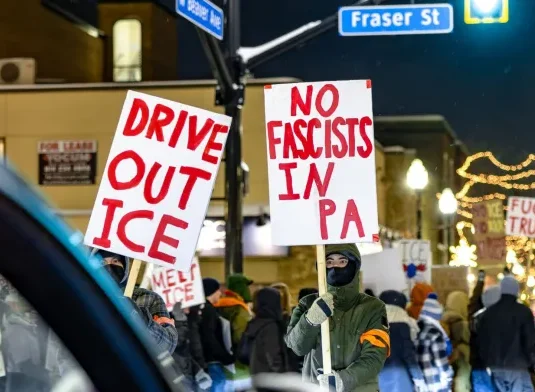
According to the University of Maryland, through the first half of 2025, the US saw approximately 150 politically motivated attacks. Charlie Kirk’s assignation is just one of many attacks against high-profile political activists and politicians this year. In June, two Minnesota legislators were shot and killed. In April, Governor Josh Shapiro’s residence was damaged after an attempt to burn it down. In December of last year, UnitedHealthcare CEO Brian Thompson was murdered on his way to an investor’s meeting. Experts have linked this spike in political violence to the rise of political extremism, which has become a normalized part of American politics since Donald Trump’s 2016 campaign.
Kirk’s Involvement In Extremism
Charlie was well known for supporting extremist policies, such as Christian nationalism, banning abortions and anti-trans rhetoric. Kirk, an openly Evangelical Christian, would not shy away from using his religion as a political tool for polarization of religious groups such as Islam, Hinduism and Buddhism. He made several controversial comments that drew criticism, like his statements during an interview in 2023, when he claimed it was worth it to have “some gun deaths every single year so we can have the 2nd amendment to give us our other god given rights.” Kirk emphasized that these rights included the right to own guns. In April, this trend continued when he claimed abortion was worse than the holocaust.
“I feel that, obviously, senseless violence, or the shooting of a person, is very serious and should be taken seriously, and I won’t be celebrating in any way, shape, or form,” sophomore Emily Brightbill said. “However, Charlie Kirk himself said many things where he overtly supported senseless violence…he died for a cause he believed in, he is quoted to be saying that a certain number of gun violence deaths per year are necessary for Second Amendment rights.”
Additionally, Kirk often conveyed disrespect and resentment toward debaters, often letting his crowd of followers boo and heckle his opponents. It was common for him to attack or make negative references to people of various religions and political views with which he disagreed. While Kirk never encouraged political violence or aggression, he never explicitly condemned it.
Aftermath
Charlie Kirk’s death has been taken advantage of and abused by his former allies. Politicians on the far right have used his death to justify the temporary suspension of Jimmy Kimmel Live!, the continued division of political parties in America, and during Kirk’s funeral on Sept. 21, President Trump used a part of his eulogy to advertise what he believes to be the discovery of the cause of autism. Kirk’s legacy is divided among people, with some calling him a martyr and others dubbing him a dangerous extremist.
“I don’t think anyone [who disagreed with him] is really celebrating his death,” Brightbill said. “We’re just not mourning him.”
While Charlie Kirk’s death is an unjustified act of political violence, Kirk himself endorsed extremist ideologies. He encouraged division between opposing political parties, religious groups and more, and this division has only made political violence more common. Suppose we want unity and peace at this time of political tension. In that case, we should instead commit to the opposite of Kirk’s teachings, move away from extremism, and stop hastily blaming one another for the cause of violence. Because if we do not take collective responsibility for these actions, then they will continue to occur.