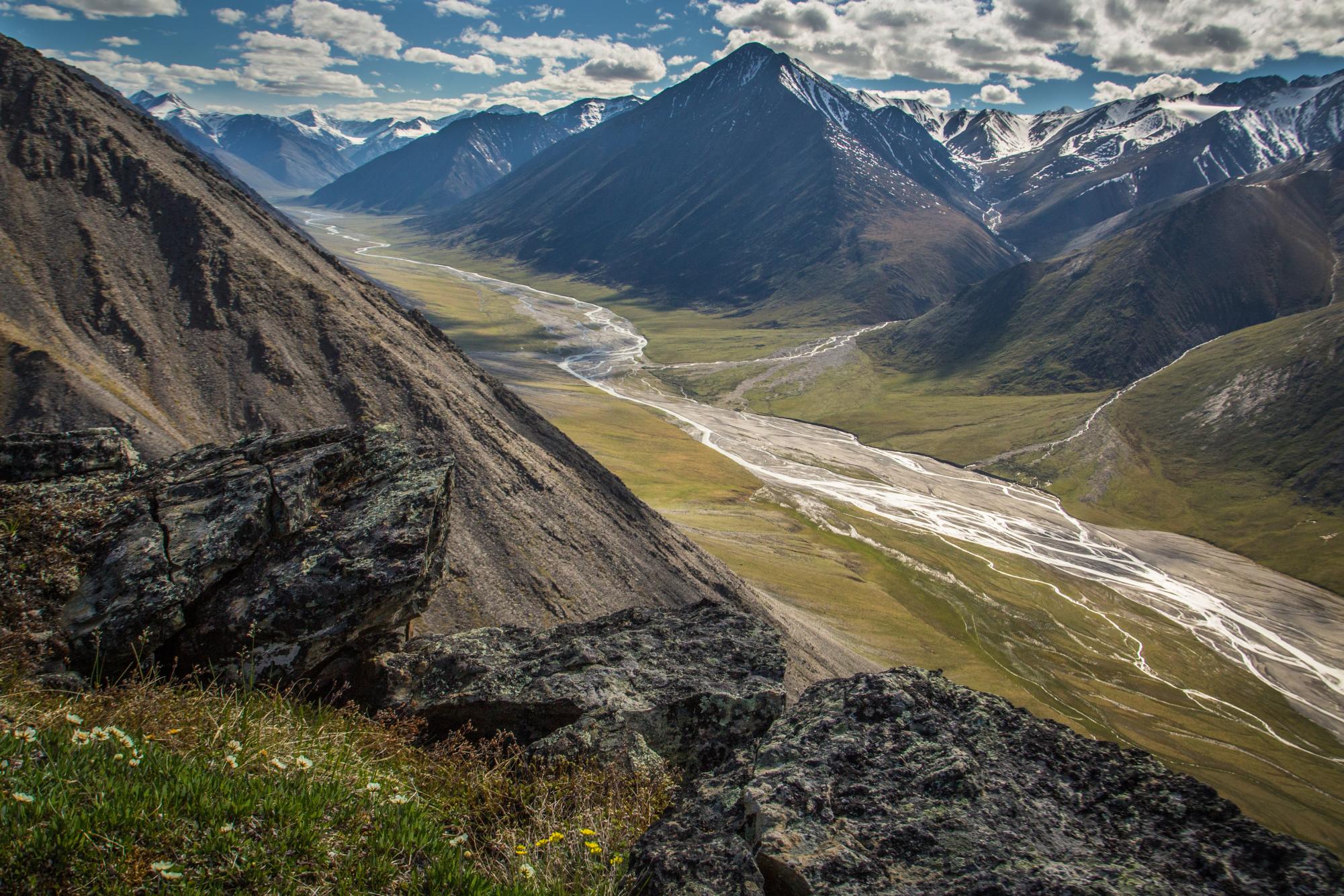
The Trump administration finalized its plans to open the plain of Alaska’s Arctic National Wildlife Refuge to oil and gas leasing on Oct. 23. Concretely, Secretary of the Interior, Doug Burgum, announced that he will open 1.56 million acres of this shelter.
This decision has generated controversy among American citizens, due to all the consequences that could be caused. The refuge borders Canada to the east and the Beaufort Sea to the north. It covers about 19.3 million acres in northeast Alaska, making it the largest national refuge in the United States.
During a press conference held by the Department of the Interior during the government shutdown, a crucial announcement was made: The cancellation of the Biden administration’s drilling program for the refuge. Instead, the Department of the Interior is going to replace that program with an earlier Trump-era Plan that fully allows the coastal plain to be developed for oil and gas development.
“Oil drilling typically is for an environmental standard, it’s typically very, like, negative. It has really bad impacts,” senior and President of the Environmental Club Kazie Dingwell said.
Opinions regarding this new change in Alaska are different among different groups of people living in the area. On one hand, this area is considered sacred by the leaders in Indigenous Gwich’in communities near the refuge. This is due to the presence of a caribou herd, a type of reindeer, that they rely upon for food, clothing and cultural survival.
On the other hand, leaders of Kaktovik, an Iñupiaq community within the refuge, support drilling and consider it a key aspect for their region’s economic well-being.
“There’s a lot of Inuit people up in that area that rely [on the land] historically for fishing and for living in that environment, a lot of their cultural heritage is there, and religious sites, and so all of this will have not only an environmental impact, but also a socioeconomic impact,” Kimberly Murphy, an Environmental Science teacher at State High, said.
There is a great number of people worried about the possible consequences on the Earth’s climate this change may have. This land is home to a significant wildlife population, which has largely been left free of industrialization.
This is why some leaders, specifically tribal leaders from the Yup’ik communities and conservative organizations, are worried that the new development may drive away migratory birds together.
“If you put a road or you put a pipeline through an area, they may not cross that because it’s something…strange and different, and so it can have a huge impact on their migrations, and that can have an impact on indigenous people who hunt them…they don’t rely usually 100% [on] hunting and gathering for their food, but they might rely like 70 or 80% on it,” Brian Dicxon, a man who lived in Alaska for 16 years, said.
Apart from that, as a consequence of Alaska warming three to five times faster than the rest of the planet, the outcome of expanded oil and gas drilling could be catastrophic both for Alaska’s communities and America nationwide.
“It’s hard to feel passionate about a project one way or the other, that you may never go and walk on that land and see, but that doesn’t mean that it doesn’t have value. And the value is far beyond the limited fossil fuels up there,” Murphy said. “The whole idea with fossil fuels is that they’re non-renewable resources, and it seems like that particular area has been in political football for a long time in between administrations, and I think it’s an area that would probably be best left untouched for as long as possible.”
As Alaskan oil drilling continues, America is still divided on the risk to reward ratio of the plan.