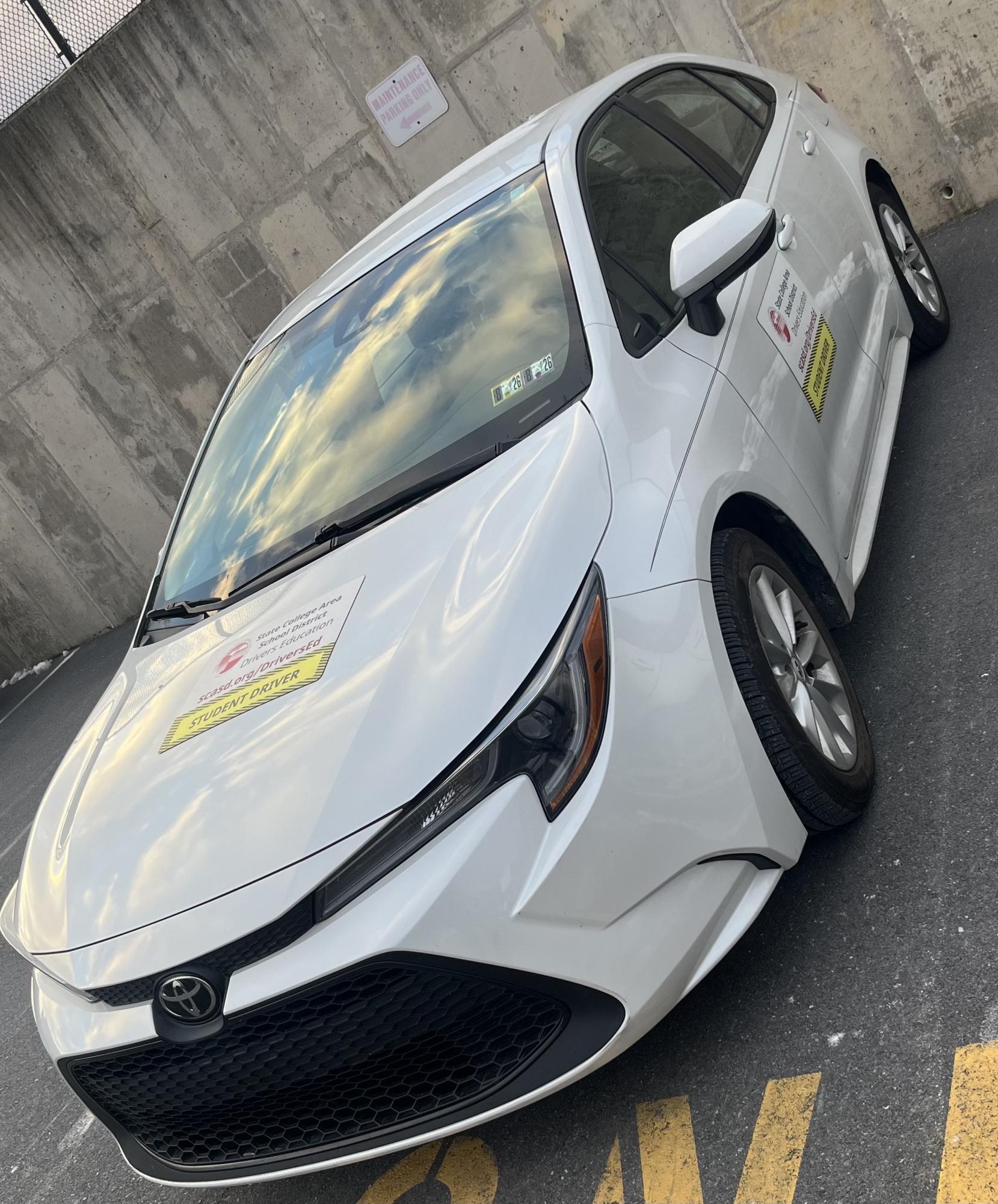
State College Area High School (State High) was the first school in the United States of America to introduce driver’s education to the school’s curriculum in 1935. However, the number of teens receiving their driver’s license is decreasing. Students’ understanding of the process of getting a driver’s license has become more important than ever.
Arnav Gubbini, a 10th grader at State High, expressed his and his friends’ excitement for getting a driver’s license.
“I don’t want to have to be driven around by my parents,” Gubbini said. “Most of my friends want to [get their driver’s license], just because it would be so much nicer to be able to drive yourself places.”
A study from San Diego State University and Bryn Mawr College found that compared to earlier years, the amount of teen drivers has been decreasing. Driving used to be a right of passage to independence.
A series of surveys given to 8th, 10th and 12th graders once a year provides the number and percent of teens driving. From 1976 to 1979, 88% of 12th graders had their driver’s licence. In contrast, in 2010-2016, only 76% of 12th graders had their driver’s licence. Moreover, from 1990 to 1994, 58% of 10th graders had driven a car, while from 2010 to 2016, only 51% had driven a car.
The first step to getting a driver’s license in Pennsylvania is to have a physical exam done by a doctor. The doctor will fill out a form that determines the driver’s physical fitness to drive. This form can be filled out up to six months before the student driver’s 16th birthday.
Next, teens need to take a knowledge test and eye screening at the PennDot Driver’s Licence Center. To study for the knowledge test, read or listen to the Pennsylvania Drivers Manual and take a practice test.
There are also certain things needed at the center. The driver needs to bring a Non-Commercial Learner’s Permit Application, Parent or Guardian Consent Form, proof of identity, social security card and payment. The payment for a learner’s permit and a four-year driver’s license is $45.00.
Once this step is completed, student drivers will now have a learner’s permit. With a learner’s permit, the student driver must be accompanied by an adult driver at all times.
Throughout the next 6 months, the student driver must complete 65 hours of driving. These 65 hours include 10 hours at night and five hours in bad weather. An easy way to track the number of hours is through the Road Ready app. The parent or guardian of the student driver fills out a form stating that the student has driven for 65 hours.
Many students find it a challenge to reach 65 hours of driving, but KimLi Kimel, the driver’s education teacher at State High, discussed the benefits.
“They just need to be persistent; they need to remind their parents that it’s a requirement. But even more importantly, they’re going to be so much better. They’re going to be so much safer. They’re going to be so much more confident on the road,” she said. “I can tell a distinct difference between the students who show up and they have those hours and they’re driving with me, and they don’t have those hours, it’s noticeable. And it’s less about checking the box of the 65 hours. It’s noticeable because you can see a difference in their confidence, and you know they’re going to be safer on the road.”
Now, the student driver is ready to take the road test at the PennDot center for free or through SCASD for a $500 fee, which includes six hours of in-car instruction and the road test. A student driver needs to bring a valid learner’s permit, parent or guardian certification form, the accompanying driver’s valid driver’s license and proof of vehicle insurance and registration. Once this test is passed, the driver will get their license.
Maddie Schwab, an 11th grader at State High, recently received her license. Schwab reflected on the road test, “First, they tested me if I could turn on my wipers, my turning signals, my lights … I had to honk the horn, and then they made me parallel park. Then I went out on the road, and I drove around, and I came back, and it took me like five minutes.”
Schwab also discussed the falling number of teen drivers. “I could say some of my friends went and got all their hours in a month,” she said. “And now they’re just waiting until they can do [the road test]. You can definitely see [the number of teen drivers is declining] because some people just don’t want to drive.”
To many, understanding how to get a driver’s license is still the first step on the road to independence.