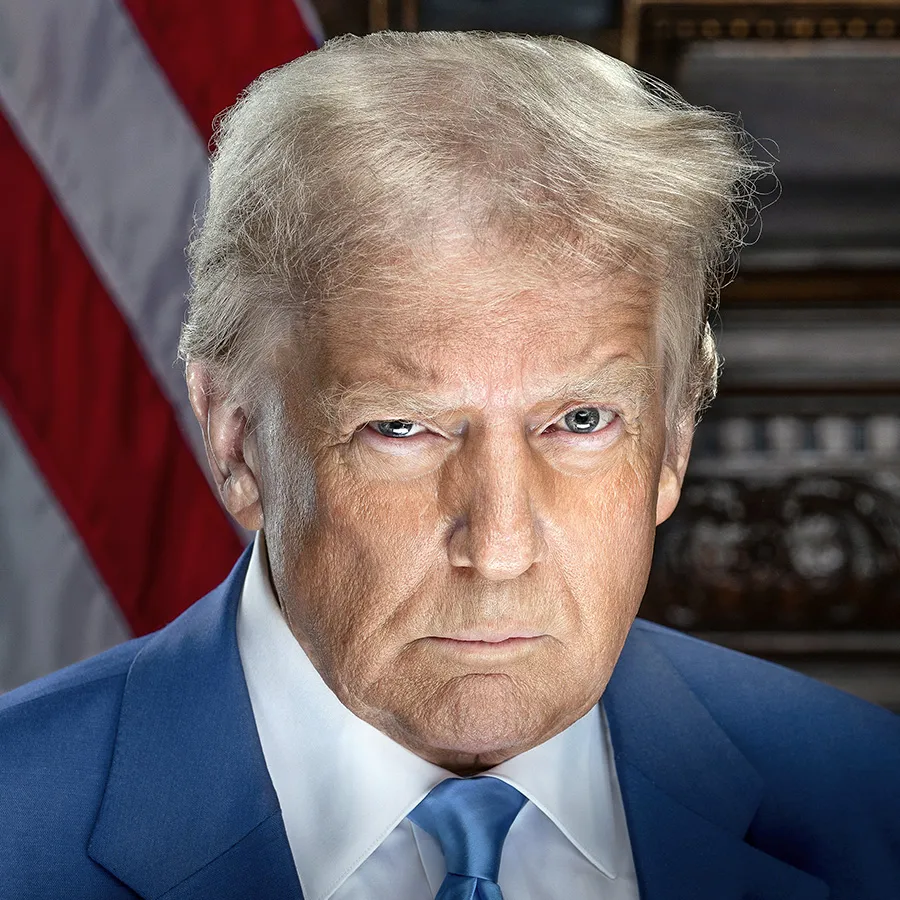
On Dec. 11, the Trump administration issued an executive order barring states from enforcing their own regulations on artificial intelligence.
The purpose of the measure, according to the president and several government representatives, was to reduce regulatory discrepancy, replacing the “patchwork” of lower-level state laws with a central framework, making it easier for companies to standardize their practices across the board.
It’s a strategy well aligned with the president’s priorities, who views technological growth as the essential battleground in America’s fight for economic supremacy over China. Vice President JD Vance crystallized the cabinet’s position on AI at a summit last year: “We believe that excessive regulation of the AI sector could kill a transformative industry just as it’s taking off.”
When the order was issued, many were hopeful that the administration would follow through with its plans to create its own comprehensive AI policy. Some even went as far as to praise the idea.
Collin McCune, head of government affairs at the venture capital firm Andreessen Horowitz, called the bill an “incredibly important first step,” claiming that “States have an important role in addressing harms and protecting people, but they can’t provide the long-term clarity or national direction” that Congress—catalyzed by a concerned president—can.
One month later, and during a time of intense national panic about the use of AI platforms to spread falsehoods, the White House’s failure to act on its regulatory plans has made many doubt their sincerity.
Today, much of the discomfort Americans feel toward AI revolves around deepfakes. A new fixture in the digital media space, deepfakes are pseudo-realistic, synthetically curated videos that display a (usually famous) person saying and doing bizarre things they haven’t said or done.
The creation of deepfakes relies on advanced software that learns people’s features and mannerisms from existing data. In a process involving GANs—Generative Adversarial Networks—the devices create rough sketches of video designs requested by users and observe minute flaws in their own productions, successively smoothing over mistakes to ensure that each iteration is more lifelike than the last. An image or video can then be imported and posted to the internet, where it competes with ordinary video footage in an increasingly-hard-to-recognize imitation of reality.
“It’s getting to be pretty insidious,” senior Andrew Gregory reflected. “You used to make fun of your grandparents for falling into the AI trap. Now I’m falling for it myself.”
Needless to say, these deepfakes pose a serious threat to media literacy and transparency—two pillars of the democratic framework already in danger—and has incited several calls for stronger AI regulations by voices ranging from that of New York Democratic Congresswoman Alexandria Ocasio–Cortez to the prominent Republican Governor of Florida, Ron DeSantis. The administration itself was criticized when the President shared this peculiar video of himself piloting a plane that released fecal matter on protesters in the Oct. 18 “No Kings” rally—though of course the majority of shock was reserved for the content of the post.
More damning to the administration’s detractors is the President’s partiality to Big Tech, shown in his history of friendly cooperation with the dominant forces in that market. The most notable of these relationships was his 10-month alliance with Tesla CEO Elon Musk, who, after donating in unspecified numbers to Trump’s 2024 campaign, served seven months as Head of Governmental Efficiency and resigned in disfavor in mid 2025.
Before his departure, Trump and Musk collaborated on an unprecedented overhaul of the federal government, resulting in the removal of several federal programs, scores of medical research grants, and hundreds of federal employees, but also the vast deregulation of—and halt in litigation against—artificial intelligence companies.
Beyond Trump’s fractured partnership with Musk, the White House remains in close kahoots with other important big tech figures, including Tim Cook, CEO of Apple, Google’s Zindar Pichai, Jeff Bezos of Amazon, and Meta’s Mark Zuckerberg, all of whom were featured prominently at Trump’s second inauguration, donated heavily to the president’s inaugural committee, and alluded, with the president’s support, to relaxing regulations on hate speech, fraud and AI within their companies’ domains—all after publicly denouncing Trump’s war on “cancel culture” and warning against the perils of AI underregulation before the 45th president took office.
“It definitely looks like he’s just making way for his cronies to do what they want without getting punished,” observed senior Andrew Haag. “And in turn, they’re willing to go along with his agenda. Most of those bans are on racial slurs and sexually explicit content. That stuff shouldn’t be controversial.”
It’s too early to say if the executive order of Dec. 13 was the fulfillment of a covert deal with Big Tech, or the first in a series of transformative steps toward bureaucratic harmony promised. What’s clear is that the issues created by generative systems, their implications for the media landscape, and their role in shaping an isolated American economy will absorb and frustrate policymakers of all types, as long as advancements in this growing field continue to transform modern life.