In the span of two and a half weeks, two American citizens have been shot and killed by ICE.
On Jan. 7, Renee Nicole Good was shot dead by ICE officer Jonathan Ross in South Minneapolis, Minnesota. Good was 37-years-old, a mother of three, a prize-winning poet, an amateur guitarist and a U.S. citizen. She had recently moved to Minneapolis from Kansas City, Missouri, with her wife, Becca Good.
Recently, on Jan. 24, another US citizen, Alex Pretti, was shot and killed in Minneapolis. The 37-year-old was an ICU nurse who worked in the area. The Department of Homeland Security said that Pretti was armed, thus the ICE agent shot Pretti in self-defense. Videos released of the shooting show Pretti was helping a woman who was shoved and sprayed with a chemical irritant by federal agents. Governor Tim Walz, who ran as the candidate for vice president in the 2024 election, called the statement from the DHS Security “nonsense” and “lies” after reviewing the video of the killing.
ICE (Immigration and Customs Enforcement) has a mission to preserve national security, protect public safety, and enforce immigration laws. However, under the Trump Administration, ICE has increased aggressive enforcement, targeting certain minorities with no warrants and expanding raids into schools and churches.
After the shooting of Good, President Trump suggested that Good was “a professional agitator.” Trump also went on to say that the reason these incidents keep happening is that “the radical left is threatening, insulting, and targeting Law Enforcement Officers and ICE agents on a daily basis.”
“ICE and CBP are trained to use the minimum amount of force necessary to resolve dangerous situations to prioritize the safety of the public and themselves,” Department of Homeland Security Assistant Secretary Tricia McLaughlin said. “Our officers are highly trained in de-escalation tactics and regularly receive ongoing use-of-force training.”
Several videos recorded by eyewitnesses documented the shooting of Good, including the events and interactions leading up to her death. These videos have sparked significant debate online over whether ICE’s methods are moral.
Ben and Sam Luhmann are teen brothers who are from the Chicago area and have participated in protests and tracking ICE during Operation Midway Blitz. Recently, they have been documenting ICE enforcement in Minneapolis and attending protests there.
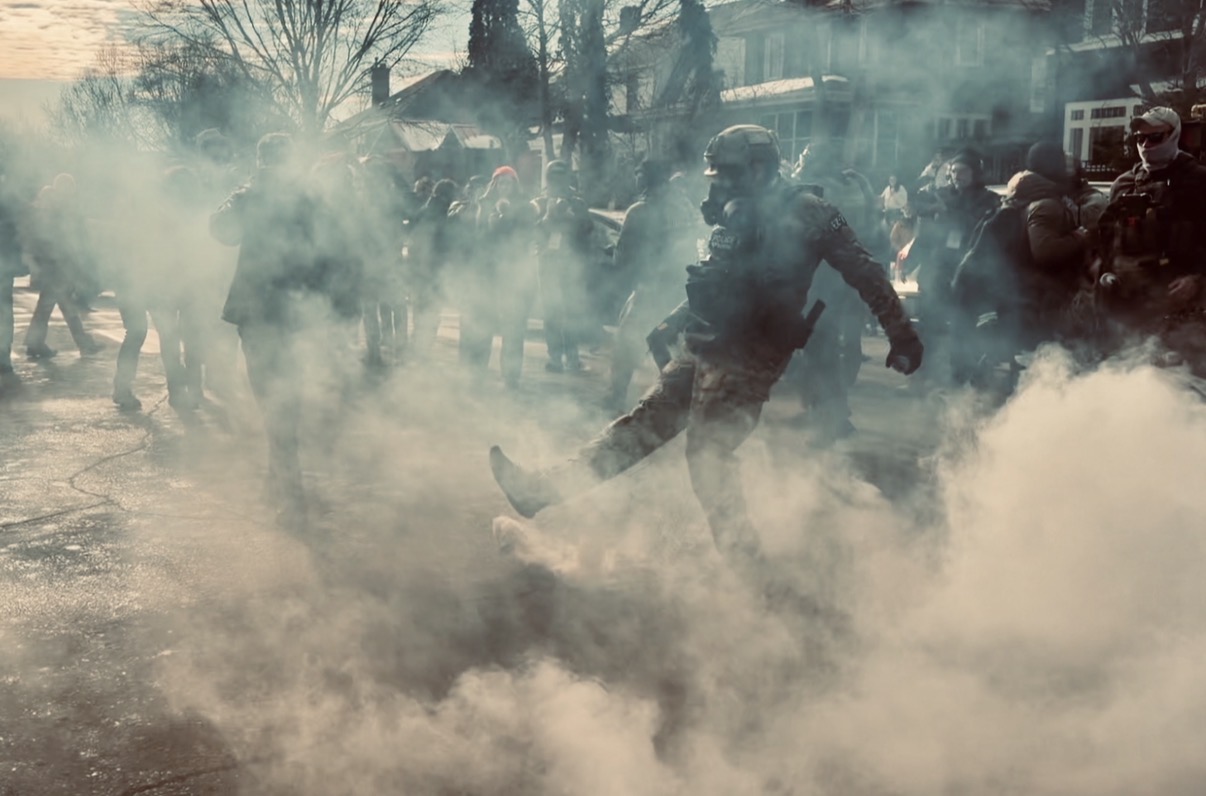
“They use flashbangs, tear gas and shoot pepper bullets,” Ben Luhmann said on how ICE handles protests and resistance against the detainment of individuals.
The duo said their scariest experience dealing with ICE was in Elgin, Illinois. They were pulled over and surrounded by DHS vehicles.
“They pounded on the doors of our car. Eventually, we opened the windows,” Sam Luhmann said. “Then, they pulled us out of the car and held me against the outside of the car.”
“I think the shooting of Renee crossed a line that no one thought was possible—them shooting a white U.S citizen awakened the national press,” Sam Luhmann added.
Federal funding for ICE has severely increased under Trump’s Administration. In 2016, the annual budget for ICE was under $6 billion. In 2025, the budget for ICE reached $85 billion. The increase in budget resulted in an influx of new, unmarked vehicles, used to transport ICE officers and detainees.
“I don’t think people understand how much of a step up it’s become since Operation Midway Blitz,” Ben Luhmann said. “We’ve seen them in person, filling out paperwork after arresting people because they didn’t know the name of the person they got.”
ICE raids in Minnesota have affected many people in Minneapolis, St. Paul, and other places in the state. On Jan. 14, in north Minneapolis, a Venezuelan man named Julio Sosa-Celis was shot in the leg after allegedly attacking an ICE agent. Recent court testimonies from two women who witnessed the event recount that Sosa-Celis was not attacking, but defending Alfredo Aljorna, who was being chased by an ICE officer.
Liam Conejo Ramos, a 5-year-old, was detained along with his father after coming home from preschool in Columbia Heights, a Minneapolis suburb. He and his father were then sent to a family detention center in Texas. The father appears to have no criminal background, and he and his son entered the United States legally in 2024.
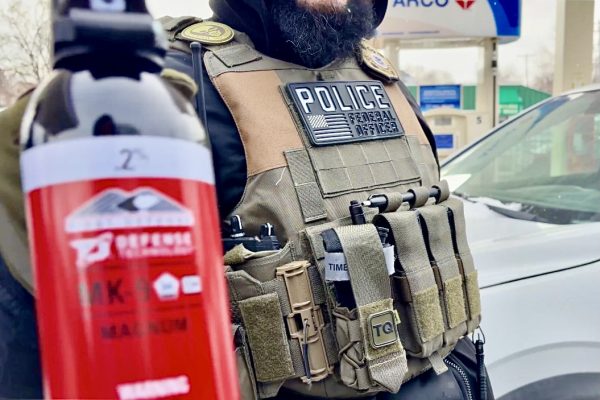
“The biggest difference between ICE and law enforcement is their way of handling a situation. Law enforcement is taught to de-escalate the situation, while ICE seems to operate in a way where they want to be able to use flashbangs and tear gas; they want to cause a scene,” Ben Luhmann said.
On the same day Renee Good was killed, ICE arrived at Roosevelt High School in Minneapolis. ICE showed up 20 minutes after dismissal for the day. ICE agents used tear gas in response to a student throwing a snowball. They also detained an educator working at the school. The educator was later released.
According to Isaiah Sparks, a Roosevelt student, the high school had the next two days off and offered a remote option for students who didn’t feel comfortable at school anymore due to the current ICE raids.
“There is definitely a lot of fear,” Sparks said. “Our school is generally pretty safe, and now suddenly, people are afraid to be on campus.”
In response to the ICE raid at Roosevelt, students organized a walkout. Over 150 students participated, and it made a significant impact on the community. Roosevelt also set up a system that helps deliver groceries to families who no longer feel safe going grocery shopping. Larger-scale organizations such as the Immigrant Law Center of Minnesota (ILCM) and the Midwest Immigration Bond Fund are also making an effort to raise money and provide resources for those in Minneapolis who are severely affected.
“The community has definitely come together to combat this,” Sparks said. “It’s frustrating that the reason behind it is so negative.”
The emotional impact on Minnesotans is also tense. Minneapolis is where George Floyd was killed in 2020 by a white local police officer kneeling on his neck for several minutes. The event made a global impact, inspiring Black Lives Matter protests worldwide. Echoes of 2020 arise due to the current racial attacks on minorities in Minneapolis.
Asian American freelance journalist and author Thomas Lee has written for the Boston Globe, the San Francisco Chronicle, the Seattle Times, the St. Louis Post-Dispatch and the Star Tribune in Minneapolis and has recently been covering ICE in the area. “It’s different than George Floyd because ICE is not local; they are imposing on our community,” Lee said.
“ICE is not rounding up people based on criminal history, but because of the color of their skin,” Lee continued. “My friends who are people of color have begun to carry around documentation and their birth certificates just to feel safe going out.”
“To the rest of the United States, ICE is not stopping here,” Ben Luhmann said when asked about the impact of the rest of the country from ICE raids in Minneapolis.
Recently, ICE has targeted larger cities such as New York, Chicago, Seattle, Los Angeles and Baltimore, but they can also be found in smaller cities. As for Pennsylvania, ICE has been to major cities such as Pittsburgh and Philadelphia, but ICE has also reached Lancaster, Reading, Pottstown, Trenton, Easton and more.
As ICE becomes more widespread, many organizations recommend that everyone know their rights. These include the right to remain silent, the right to demand a judicial warrant before letting ICE enter one’s home, and the right to speak with a lawyer if arrested. Whether people believe in ICE’s mission or not, they still could get targeted, and crucial civil liberties are being brought into the conversation.