Americans are online for an average of 8 hours a day. 82% of people now use generative AI weekly. Social-emotional development in elementary schoolers has sharply decreased due to excessive technology use. In the midst of an exponentially expanding online world, more and more of us need to cut the wires and go offline.
This comes at a time when social media has seen a rise in interest in switching to what it calls an “analog lifestyle”– the opposite of a digital one. Creators are promoting habits like switching to offline hobbies, decreasing screen time, and introducing the concept of whimsy into everyday life. Better yet, consumers are eating it up.
“I know recently, a lot of influencers on Instagram and other social media platforms have been promoting less screen time, just for your overall wellness and mental health,” senior Maddie Brown said. “I think that’s great because it’s showing these younger kids that they don’t have to be on their phone all the time.”
According to Common Sense Media, 42% of children have a phone by age 10, and 91% by age 14. The report also includes the statistics from above.
The lower that age number drops, the earlier on children experience the negative effects of smartphone use. A popular book exploring this phenomenon is Jonathan Haidt’s “The Anxious Generation,” which argues that children have transitioned from a play-based childhood, where boredom leads to connection and creativity, to a phone-based childhood, where gaps in the day are automatically replaced with digital dopamine.
“I [grew up] really enjoying being offline without knowing it, because I didn’t have access to a phone or any Internet until I was a little older than most kids. But then throughout COVID, I became really addicted to my phone, like most other teenagers,” junior Joslin Adams said. “Then more recently, I’ve really seen the benefits of being offline and how much more fulfilled I feel when I’m not on my phone.”
That’s what influencers are now promoting– living life like humanity is pre-phone. While the origins can’t be traced back to a specific creator, the idea of “whimsy” has been trending: meaning a more fanciful and slow life, one where screens take a backseat to real-world experiences.
“[Offline], I love playing my guitar at home and singing, and I also love to draw and paint, so those are things that I feel like I can’t really do on a screen, and it’s nice to take a break,” Brown said.
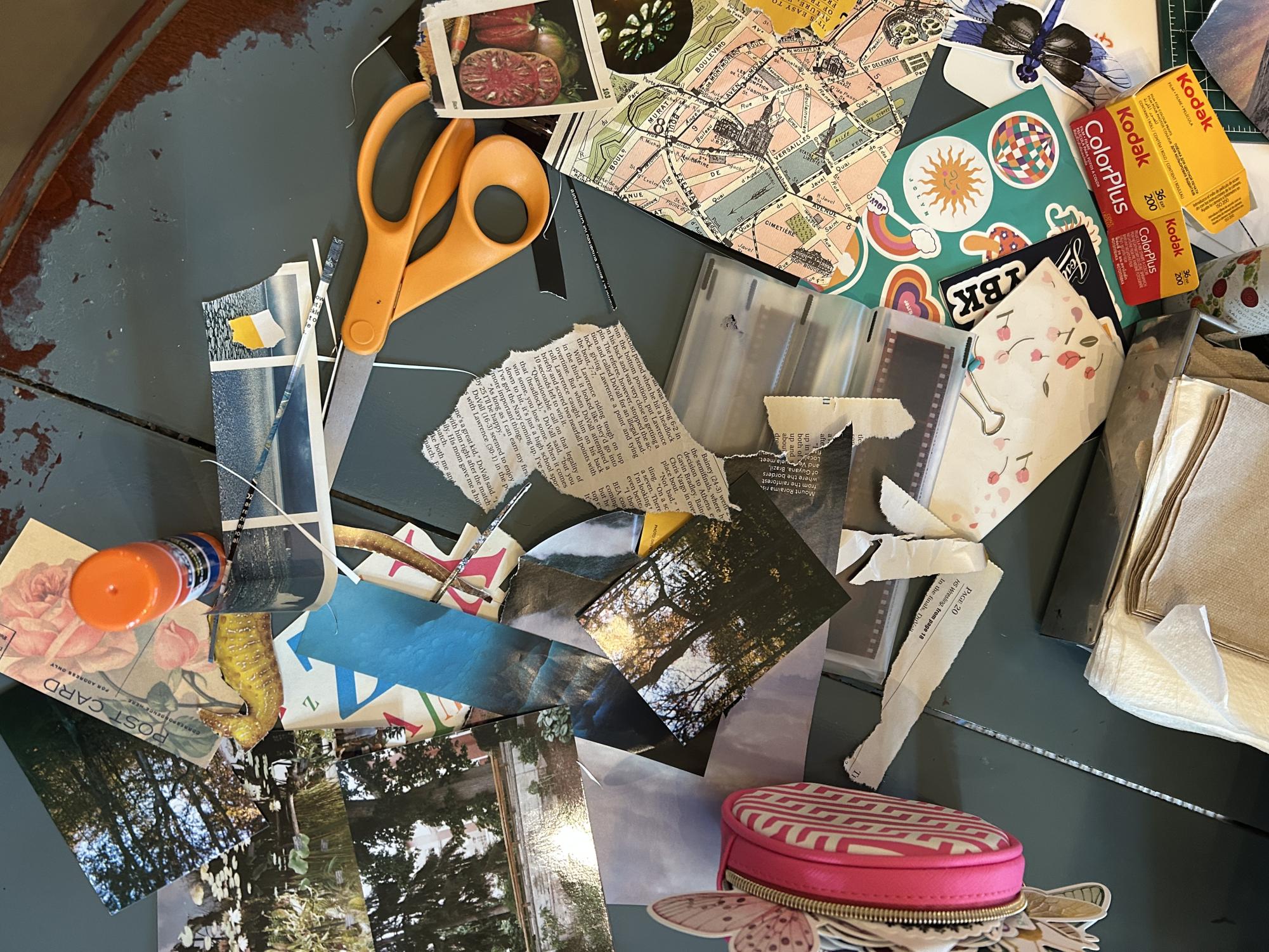
Besides engaging in more whimsical hobbies, another trend has been the “analog bag.” Influencer Sierra Campbell (@siececampbell) coined the term, and it refers to a bag filled with hands-on activities. Examples include a deck of cards, a sketchbook, a digital camera, and any sort of activity that doesn’t require an internet connection.
“In order to change a habit, you have to replace it. Instead of grabbing for your phone [when you’re bored], you have lots of other things your hands can grab for instead,” Campbell said in a video. Her page revolves around living a whimsical life, allowing minds to be bored, and to fill that void with analog activities instead of digital ones.
Taking the time to be intentional about digital consumption combats another growing worry: AI. The whole analog trend coincides with an era on social media where it’s getting more and more difficult to discern whether or not a video is real.
“It’s an anxiety-inducing thing, because I know that AI is getting so much better … so much of social media is fake, so I don’t really see a point in spending so much time online when I can just look around me and see the world,” Brown said.
The analog trend responds to tech companies cramming artificial intelligence down throats, asking consumers to return to what matters: slowing down. Connecting with others. Using real human intelligence to create, rather than continuously replacing humanity with artificiality.
“It’s really important to be cognisant of when … you’re filling your boredom with technology– it’s okay to be bored and to find something else to fill that void, like a creative outlet or a sport, or just going outside for a walk,” junior Ryan Stapleton said.
Nowadays, our heads are filled with constant static, replacing our brains with trends, news, work, and pressure, pressure, pressure. We now define ourselves by our presence online, rather than our real, tangible lives. It’s time to manage your time, whether that be creating more, screening less, or replacing scrolling with intentional connection. Slow down. Don’t let humanity become a thing of the past.