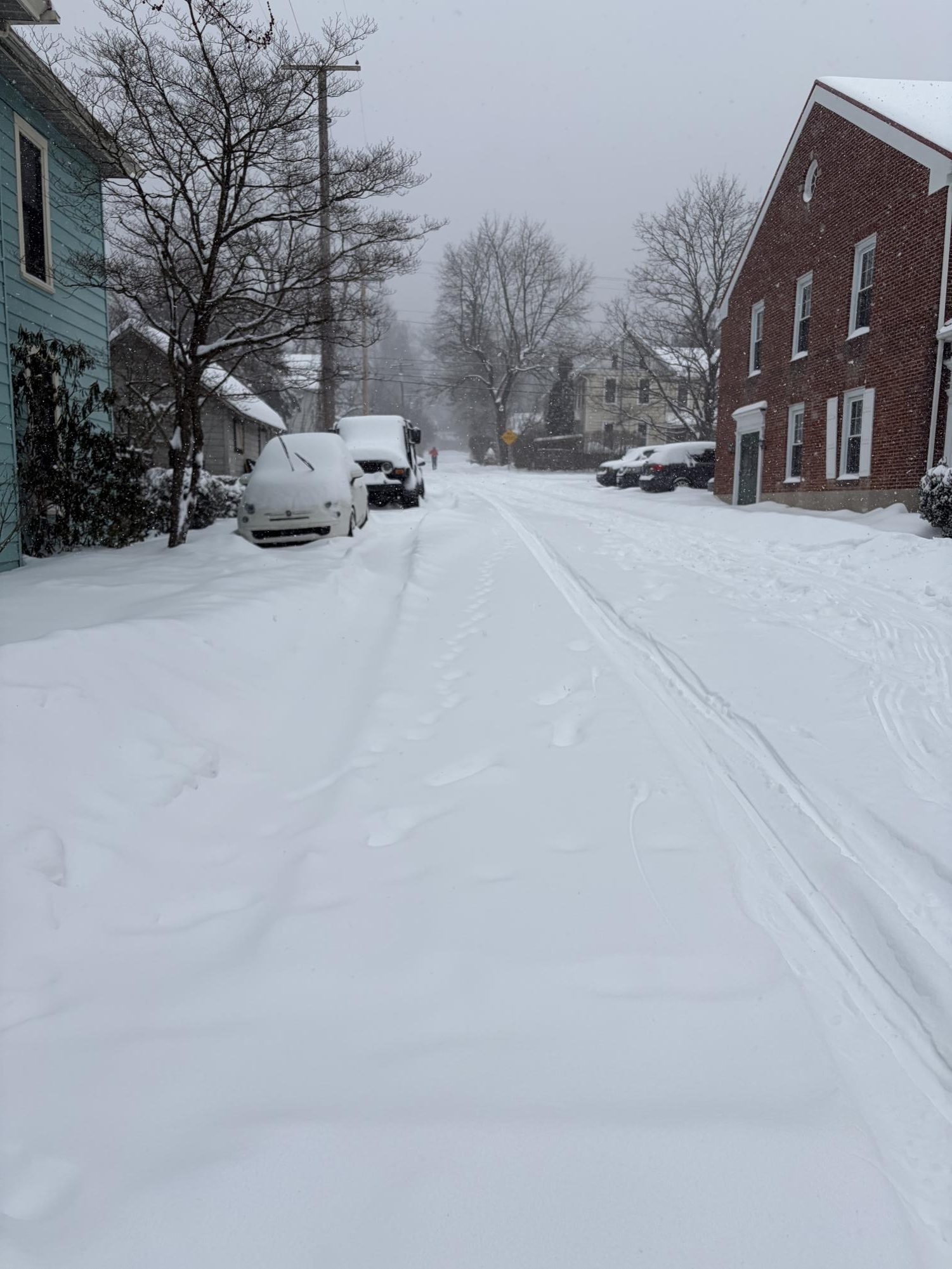
In the early morning of Jan. 25, the largest snowstorm of the year made landfall in State College, dumping over a foot of snow on the community, causing countywide closures and cancellations. Even after the storm has passed, the impacts are still being felt across the country.
Background
The January 2026 North American winter storm stretched 2,000 miles across the country, going as far south as Texas and Arkansas. The storm dropped several feet of snow across the country, in addition to freezing rain and sleet, impacting an estimated 230 million people across the U.S. Additionally, the storm caused 24 states to declare statewide emergencies, and over 10,000 flights nationwide to be canceled or postponed.
Before the storm, a dry and cold bubble of energy moved down from the North, which combined with warm and wet weather from down South, setting up the storm system:
“The overall setup that led to this storm system, there was a big piece of energy in the atmosphere that dipped down from the western part of the prairies of Canada,” Geoffrey Cornish, a meteorologist at AccuWeather, said. “We had that contribution from Northwest of Mexico that fed subtropical moisture across the southern US. And those two factors, together with this aggressive Arctic front that pushed out, led to this really, really, widespread swath of the southern US, all the way to the northeast, which led to a huge impact for almost a third of the nation or so with snow or ice.”
Multiple cities on the Eastern Front, including Philadelphia and New York City, saw their heaviest snowfall accumulation in nearly five years. The most since the infamous nor’easter in January 2021, which caused over 1 billion dollars in damages and left over half a million people without power. This year’s storm caused much more damage, leaving over a million people without power and costing nearly 4 billion dollars in destruction.
Local Impact
After the storm passed, a cold snap, a rapid drop in temperature, rolled into Central Pennsylvania, causing the school districts in surrounding areas to issue delays or cancellations throughout the week due to the sub-freezing temperatures.
“This is a pretty rare territory. Not a record low from 1977, when it was 10 degrees below zero, but still not far off,” Cornish said.
“The storm and the cold snap that came after were rough,” sophomore Rishi Patel said, “No one really wanted to go outside because it was miserable to bear those conditions. It was like we were in the Arctic.”
The increased time indoors also caused a sharp rise in reported illness, particularly the flu and influenza. However, with the temperatures rising and people returning outside, the number of illness begun to drop.
Future
Despite the storms passing, Cornish still believes that this will not be the last of our winter weather.
“It is unlikely that we’d see another foot of snow in one storm this winter. But we will remain cold through the first half of February. And then there are some signs that around mid-month, [things] are going to warm up at least.”
Meteorologists across the country have predicted that the spring thaw should come sometime by mid-March. But due to the unpredictability of the weather, primarily driven by climate change, show that this winter is far from over.