

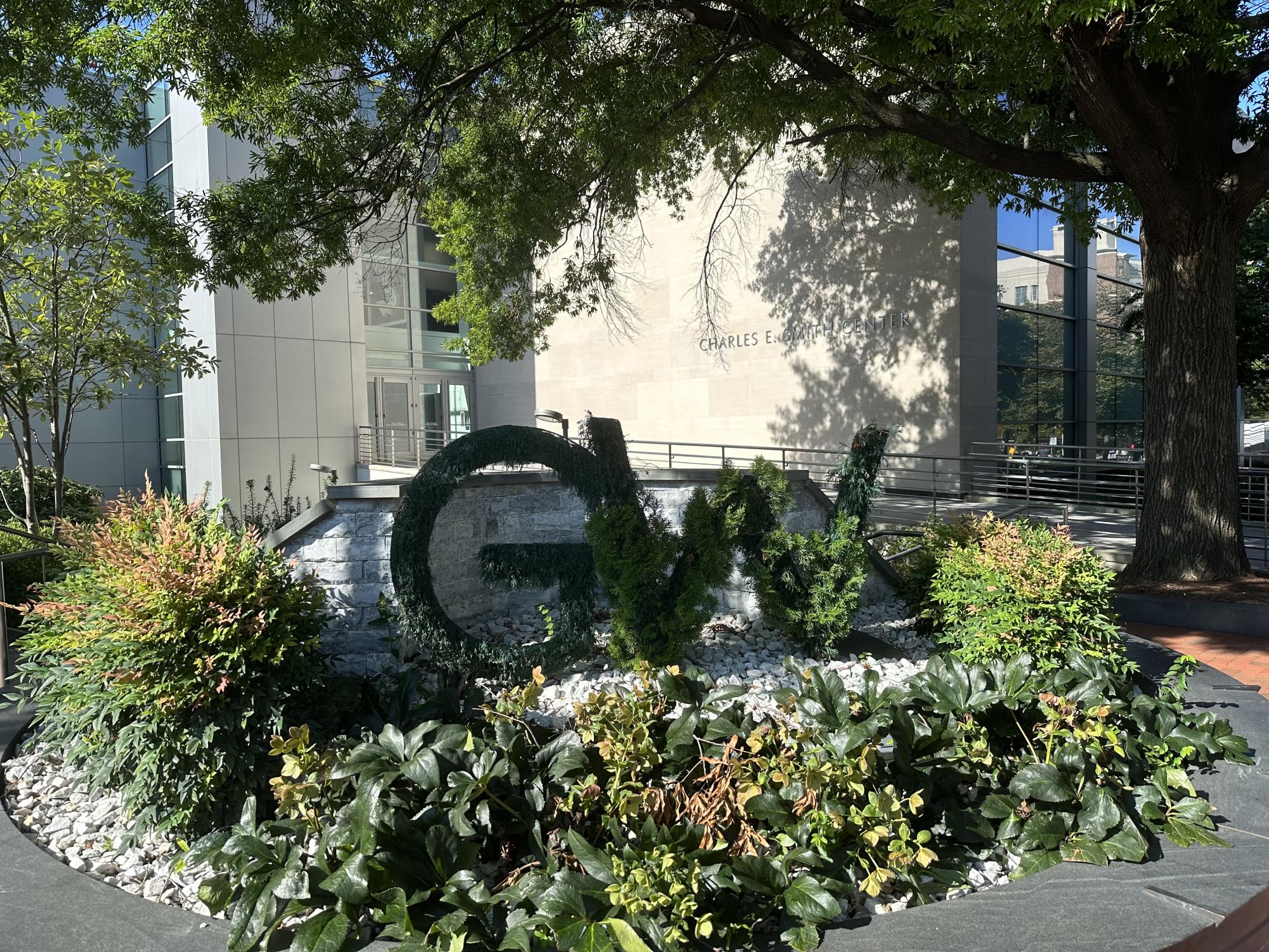
On April 2, Turning Point USA held an event at the George Washington University (GW), drawing a large audience of GW students from across the political spectrum. The event featured speakers like White House Press Secretary Karoline Leavitt and Erika Kirk, Chairman and CEO of Turning Point USA. It was the first stop on the “This Is The Turning Point Tour” that was scheduled to visit several university campuses across the country.
The format consisted of a conversation between the two well-known conservative thought leaders, followed by a period for audience questions. During the event’s Q&A session, GW freshman Ryan Caldwell, a 2025 State College Area High School graduate, became a focal point after questioning how the discussion was managed.
Caldwell, who had attended a previous campus event featuring Department of Health & Human Services Secretary Robert F. Kennedy Jr., described his interest in open dialogue and engaging with differing viewpoints.
“I went to an event they held in the fall… and I actually enjoyed the event quite a bit,” Caldwell said. “It was interesting to hear his perspective and hear a lot of views that I disagreed with… I also just value in general listening to people I disagree with. I think that is really important.”
As the Q&A began, Caldwell observed what he described as a structured line that prioritized certain participants.
“Essentially, they [Turning Point USA] were given the first few spots, and then GW students and other attendees of the event had to line up behind them,” Caldwell said. “And that would have been fine if they let the GW students speak, but… they ended the Q&A before it got to any students that were not a part of the event.”
According to Caldwell, he was approached by event staff and instructed to return to his seat as the session was concluding, which he declined to do.
“They told me… that the Q&A was going to end, and I told the person talking to me that I wasn’t going to sit down,” Caldwell said.
As the exchange continued, audience members began reacting, drawing more attention to the situation occurring and encouraging Leavitt and Kirk to let him speak.
“It felt great whenever the crowd just really started getting into it,” Caldwell said, describing the moment. “People caught onto the fact that I was somebody who opposed them.”
Caldwell was eventually able to ask a question related to the SAVE Act, which he described as a significant issue.
“I just asked about the SAVE Act because it’s something that I feel is very important right now…and it’s also something that a lot of Americans haven’t heard about,” Caldwell said.
The Safeguard American Voter Eligibility (SAVE) Act is a bill introduced in the House of Representatives that “requires individuals to provide documentary proof of U.S. citizenship when registering to vote in federal elections.”
He later identified the response from the speakers as indirect.“She didn’t really directly answer the question, which didn’t surprise me. She’s a professional press secretary… And then she even kind of turned the question back on me,” Caldwell said.
Other students offered perspectives on both Caldwell’s actions and the structure of the event. From the perspective of a current State High student, junior Joslin Adams viewed his actions as notable compared to typical student engagement with political activism.
“I think it’s pretty common, but never to this extent. And a lot of people repost things and talk about it, but never actually take action,” Adams said.
At the same time, Adams described Caldwell’s response as consistent with his personality and beliefs.
“It seems really on brand for him,” Adams said, pointing to his continued involvement in political discussions.
At George Washington University, student government member Katherine Carroll emphasized the importance of aligning event expectations with execution, particularly for public Q&A sessions.
“If you’re marketing yourself as there’s going to be a Q&A portion where students can ask questions, that should be how it truly is,” Carroll said.
Carroll also pointed to the university’s location in Washington, D.C., as a factor influencing student engagement with political events like this.
“We are only three blocks from the White House, four blocks from the State Department, really close to everything that is happening in D.C., and that’s largely having a big effect on how the university runs,” Carroll said.
Caldwell, reflecting on the broader purpose of events like this, emphasized the role of open discussion in a democratic setting.
“I think the concept of the event is incredibly important,” Caldwell said. “I think the execution of this specific event is basically undermining what these events are supposed to do.”
This event highlights ongoing conversations about political discussions on college campuses and raises questions about how student voices are incorporated in public events.

Silas Gould • Apr 24, 2026 at 6:00 PM
This is really well written!