
The United States government shutdown began on Oct. 1 at 12:01 a.m. EDT as a result of congressional failure to pass appropriations legislation for the 2026 fiscal year. This resulted in a funding gap that could cause several government functions to be temporarily disrupted.
But these functions don’t just affect D.C., of the over 2 million federal employees in the government, 80% live and work outside of the Washington, D. C. metropolitan area. Most notably, the shutdown left around 1.4 million federal employees on unpaid leave or working without pay and paused funds for SNAP benefits.
“As we have grown as a country, the federal bureaucracy and the government [are] quite large and affect even the littlest of things,” Brian Smith, AP U.S. History and U.S. Government and Politics teacher at State High, said. “The number of people that are affected continues to grow as the shutdown goes on.”
Supplemental Nutrition Assistance Program (SNAP), formerly the Food Stamp Program, provides monthly funds to buy groceries to 42 million Americans. The size of a family’s SNAP benefit is based on its income and certain expenses, but households that receive SNAP benefits typically receive an average of about $350 per month.
But because federal funds have run out due to the shutdown, payments to SNAP recipients will be missed, and some already have. Two million Pennsylvanians will lose SNAP benefits this November due to the government shutdown, and as of Nov. 1, nearly 9,000 Centre County residents will not receive benefits.
“The SNAP program provides pretty modest benefits…But it is critical, critical assistance that makes the difference in people being able to put dinner on the table every night,” according to Sharon Parrott, President of the Center on Budget and Policy Priorities.
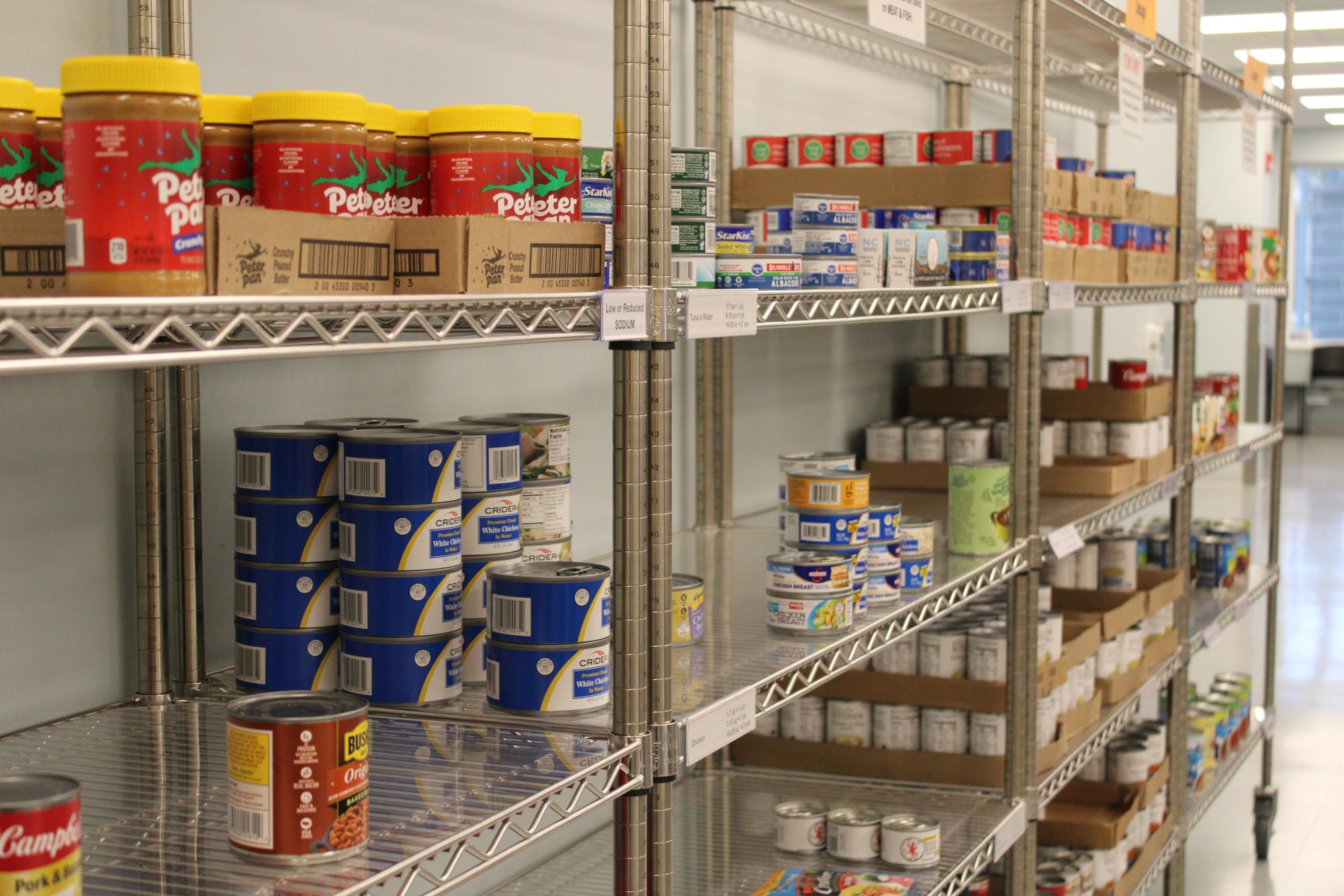
With this lapse in funding, families in Centre County may struggle to put food on the table, leaving many to increasingly turn to local food banks.
Executive Director of the State College Food Bank, Allayn Beck, described the preparation for the growing need.
“Knowing that we’re heading into this, even the last couple of weeks, we’ve been trying to spread community awareness and help garner more support from our community to help us,” Beck said. “The more donor dollars or donations of food, the easier it is for us to meet the growing need.”
Beck estimated that State College Food Bank currently serves around 650 households, and is expecting more as the holidays approach and more households in Centre County miss their SNAP payments.
Another effect of this shutdown is the impact on federal employees. As of Sept. 24, 66,656 federal civilian employees were working and residing in Pennsylvania, but during a government shutdown, agencies must identify staff who are exempt, furloughed, or excepted.
Exempt employees are not affected by a shutdown, and excepted employees are told to work without pay. Furloughed employees are sent home without pay, but under the Government Employee Fair Treatment Act of 2019, furloughed employees are required to receive retroactive pay (back pay) once the government reopens.
While pay dates can vary across the federal government, government employees who were affected by the shutdown received a partial paycheck on Oct. 10 but did not receive their subsequent paycheck, scheduled for issuance on Oct. 24. Additionally, during a shutdown, agencies will continue to assess workforce needs and may change who is furloughed or excepted.
Thus, the government shutdown has resulted in many federal employees, including those in State College, experiencing substantial income gaps. “If the shutdown continues through December 1, roughly 4.5 million paychecks will be withheld from federal civilian employees, representing approximately $21 billion in missing wages,” according to the Bipartisan Policy Center.
Other impacts include air travel, as “approximately 61,000 of the [TSA’s] 64,000 employees are considered excepted or exempt” according to the BBC, leading to staffing shortages, longer wait times, and increased flight delays.
Although these are not all the impacts of the government shutdown, they are the most notable, as they affect many communities across the country, including Centre County.
All information contained in this article is valid as of Nov. 9, 2025.