Winter blows into State College with ice-coated sidewalks, wind-scattered snow, and the sharp bite of cold in the air. Through the frost-touched surface of a window, the outside world appears still and lifeless, blanketed in the heavy silence of winter.
But peering into the snow-laden trees of a forest or patiently watching the gray sky can tell a different story. A flash of color. A flurry of wings. A tittering melody. And soon, it is apparent that winter is not as lifeless as it may appear.
As fall turns to winter, most birds fly hundreds to thousands of miles south to reach warm weather.
“In the winter, a lot of the really cool birds that we have in State College, like warblers, usually migrate down south to Central and Southern America,” Dasha Nekrutenko, bird watcher and secretary of State High’s environmental club, said.
For birdwatchers, the change in birds brings additional challenges.
“There’s not as many flashier birds to look for … and there’s just not as many birds out,” junior birdwatcher Autumn Swisher said. “So I think a lot of people kind of get discouraged.”
However, the freezing northern temperatures don’t deter all birds; some year-round species remain in the north, facing the cold of winter until spring warms the earth again.
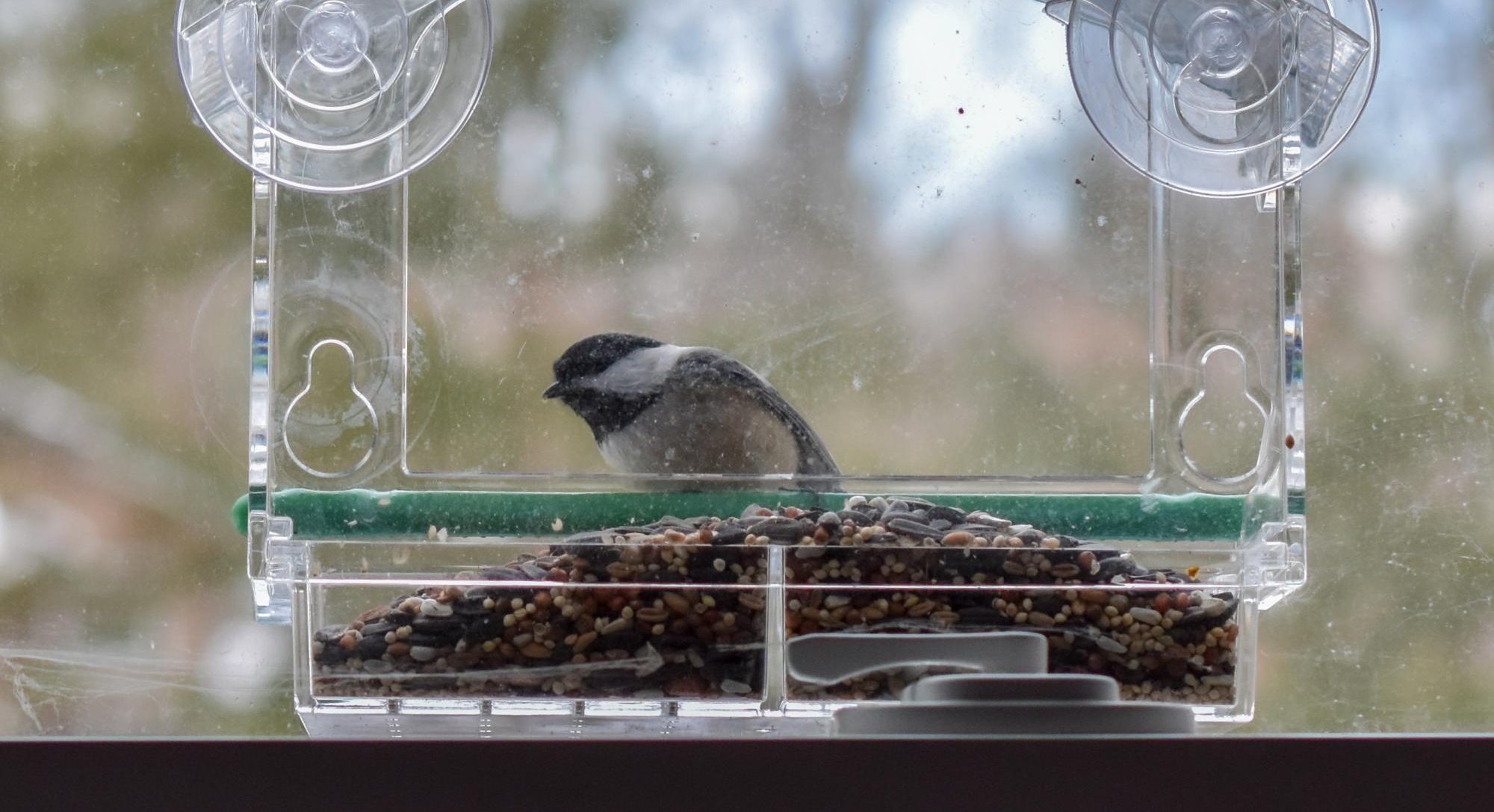
In order to survive, these resilient birds adopt special winter behaviors, such as fluffing their feathers to increase insulation, consuming large amounts of high-calorie food, and lowering body temperature at night to conserve energy.
Because of these birds, birdwatching is still possible, even in the depths of winter.
House Sparrow
One of the most common year-round birds in State College is the House Sparrow.
Male House Sparrows have a black patch, called a bib, underneath their beak, chestnut and black patterned upperparts, and whitish underparts. Females have light brown underparts, darker brown, black, and tan upperparts, and a white stripe on their wing, called a wing bar.
These widespread birds can be found in cities, neighborhoods, farms and other manmade structures.
Downy Woodpecker
Downy Woodpeckers are small, black and white birds, with a conspicuous red spot on the back of males’ heads. They are fond of suet feeders, blocks of animal fat, seeds, and nuts, and are common in woodlands, parks, and backyards.
To distinguish from Hairy Woodpeckers, which are similar in appearance, take note of the size; Downy Woodpeckers are about two-thirds the size of a Hairy Woodpecker.
White-throated Sparrow
White-throated Sparrows are unique in that they are not year-round residents of State College. During the winter, they migrate from far north areas, such as Canada and New England, to the eastern and southern United States, including State College.
White-throated sparrows are brown on top, gray on the bottom, and have a black and white striped head. A small patch of bright yellow sits between the eye and bill, and a bright white patch resides on the throat.
To Nekrutenko, white-throated sparrows are a favorite because they symbolize the start of winter.
“I’m a really big fan of the white-throated sparrow because when they start coming to my feeder, I know that winter has begun, because they migrate … to State College, and they’re here throughout the winter,” Nekrutenko said.
Blue Jay
Its bright blue feathers and loud call make the Blue Jay one of the most recognizable eastern year-round birds. With light gray and white underneath and shades of blue, black, and gray above, Blue Jays often stand out from their surroundings, making them relatively easy to spot in their common habitats of forests and forest edges, towns, cities, and parks.
Like the resilient winter birds, don’t let the cold temperatures deter you. Next time you step outside, take a moment to be still. Quietly search the treetops and listen, and you may be surprised to discover the life hiding even within the hush of winter.