Somewhere in America, in the time it takes you to read this sentence, three people will need blood.
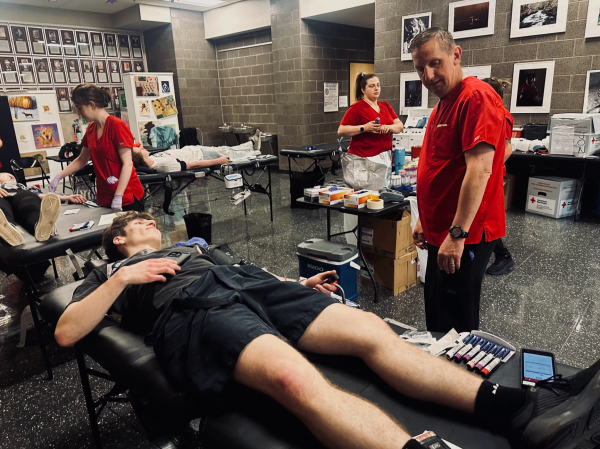
On Wednesday, April 15, at State High Key Club’s second blood drive this school year, 42 students and staff walked into the Center for Equity & Global Leadership (CEGL), and the 32 who were eligible to donate did something about that.
Nevertheless, by the end of the day — accounting for the Red Cross’s estimate that one donation saves three lives —those thirty-two students may have saved 96 people they will never meet.
That is a number worth sitting with. So is this one: only 3% of eligible Americans donate blood each year.
In January 2026, the American Red Cross declared a severe nationwide blood shortage, with inventory dropping at an alarming rate. This is nothing new—over the past two decades, blood donations have dropped by 40%. Yet, over 13,000 blood donations are required daily to serve around 2,500 hospitals across the United States.
Blood cannot be manufactured. Nor can it be stockpiled forever. It can only come from people who choose to give it — and right now, nowhere close to enough people are choosing to do so.
As it turns out, high schoolers have more power to fix that than most realize.
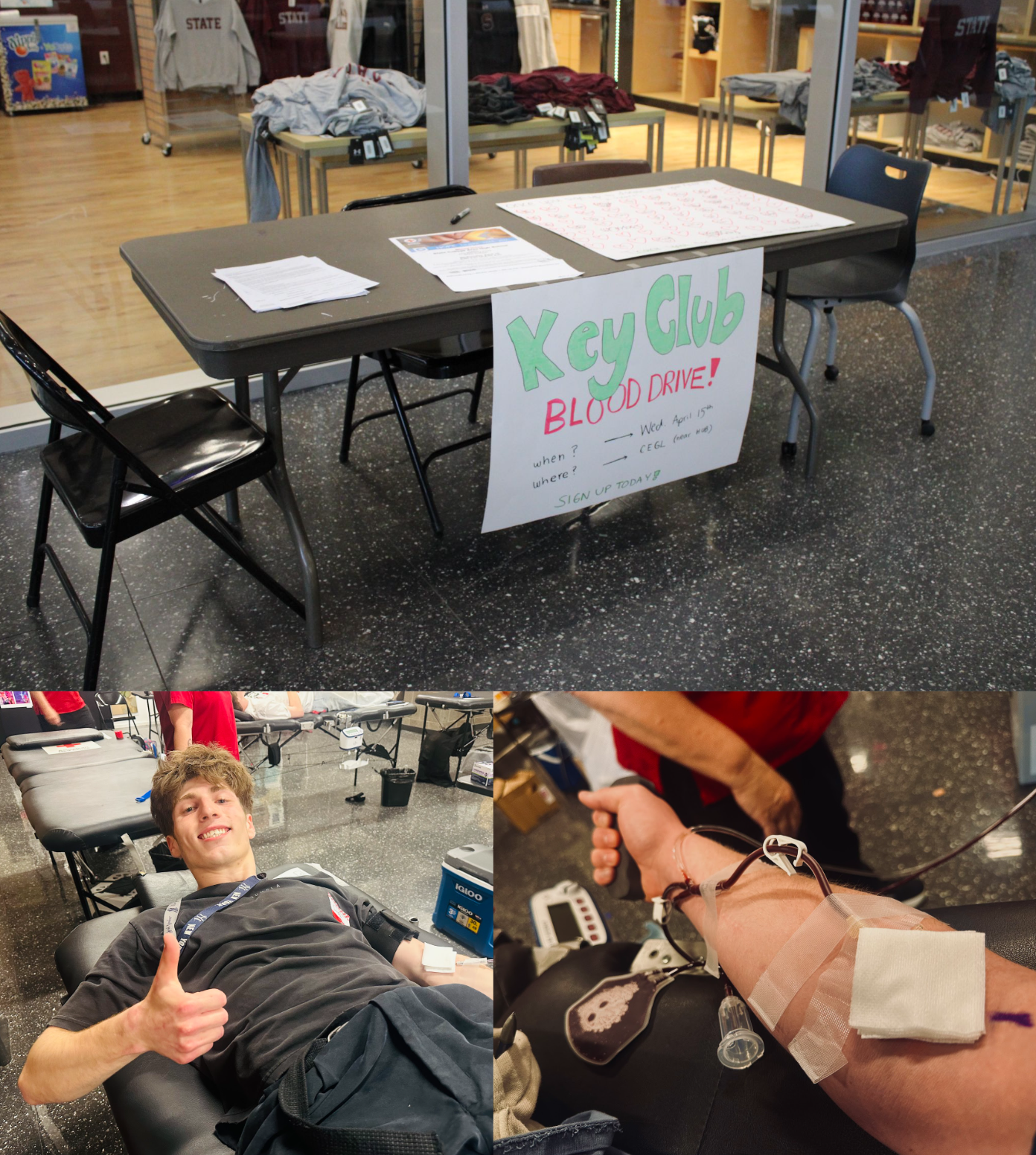
On April 15, the first time in my life — a fresh adult, able to walk into a blood drive without the need for a parental consent form — I donated blood. It was a Power Red donation, open to male donors above the age of 17, and it collects double the red blood cells of a standard whole blood donation, taking about 20 to 30 minutes longer.
Sitting in that chair, watching the machine work, it’s hard not to think about where all that blood is going.
Within seven days, according to Rob Chericky, the charge nurse who oversaw the drive, the blood collected in the CEGL will have been tested, filtered, packaged, and shipped to local hospitals. “There’s always a need for it,” Chericky said. “[We’re] out there saving lives. That’s the biggest part.”
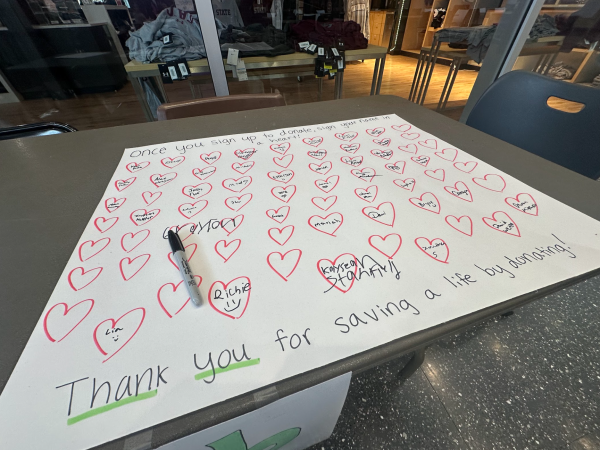
This recent blood drive — the first since December 2025 — ran from 9 a.m. to 2:15 p.m., organized entirely by Key Club members who spent the prior week at a table in the hub with a sign-up sheet, with volunteers showing up early on Wednesday morning to check IDs, hand out nametags, and make sure every donor had eaten breakfast.
The donation process is quick and relatively painless — after a brief eligibility check, donors are walked to a bed, and a standard whole blood donation is completed in under 10 minutes. After a 15-minute wait to ensure donors aren’t dizzy, it’s back to class. The Red Cross also offered free $15 e-gift cards delivered via email, a frequent initiative at blood drives that get delivered within weeks of donating.
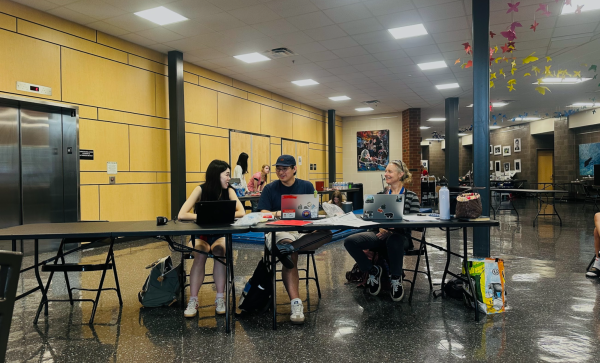
Senior Emily Chen, one of the volunteers, sees the value in doing this at a school specifically.
“It’s good to set up a precedent of normalizing giving blood,” Chen said, “so that more people do it later on in their adult years.”
That idea of “normalization” is backed by data, as students who begin donating in high school are much more likely to become lifelong donors.
That’s exactly why Key Club President Zauima Samoon, who has been involved since the drive’s expansion from once to twice yearly during the 2023-24 school year, thinks the work matters beyond mere numbers.
“This is just one thing that high schoolers can do that will help so many people,” Samoon said, “and at our age, it’s kind of hard to find opportunities like that.”
Samoon is under the 110-pound weight requirement and cannot yet donate herself – in fact, 10 to 15% of potential donors get deferred for reasons like this. “If they’re underweight they can’t donate, or if they’re on certain medications…had a tattoo recently…[or] been out of the country. There’s multiple reasons why you could get turned away, but they don’t discourage you [from coming back],” she said.
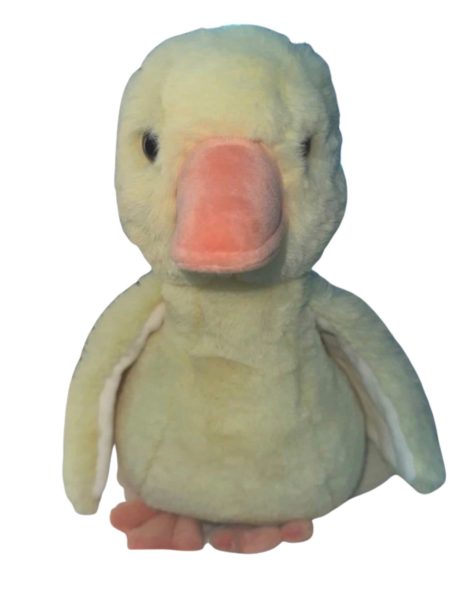
Samoon brings an emotional support duck to the drive to help soothe the nerves of eligible donors. She knows that the fear is real — whether it be needles, uncertainty about the process, or not knowing where the blood goes. But she has advice to those hesitant about giving: “It’s okay to kind of be worried about it. But this is one of those moments where you’re doing this for a bigger cause. Try to think of the bigger picture.”
Several donors at the drive already had. Junior Liam Kissell, a first-time donor and a diabetic for whom needles are, as he put it, “a daily occurrence,” came because he wanted to help, and he knows firsthand what blood can mean. His sister was in a car accident severe enough to require transfusions.
“There are people in the world that need our blood,” he said before his donation. “We’re able to give it, and they need it to live.” After donating, Kissell was fine — albeit mildly sweaty and ready to get back to his study hall.
Senior Aaron Aneckstein has donated at nearly every State High drive for the past two years. His reasoning is simple: “I’m a healthy, able-bodied person. I don’t really see why not.” He acknowledges the fear many others feel — “people think of big needles as scary stuff” — but frames the experience plainly: “it’s just an initial shock, and then you get to miss half of a class.”
Senior Katy Schmeck, donating for the third time, called it “super quick, super fun.” And when asked if it feels different knowing her blood could save more than one life, she didn’t hesitate. “Yeah, it feels a lot better. I think that’s the reason we do it.”
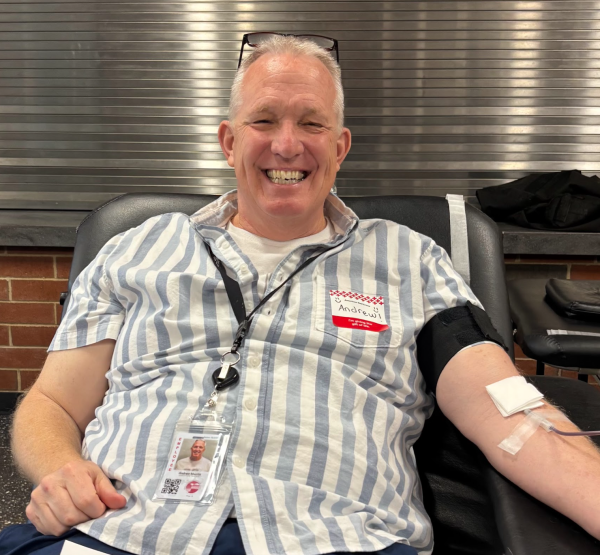
Andrew Merritt, a recently retired State High AP Government teacher now working as a substitute teacher, has been donating blood for 45 years — since he was 17, when his mother took him for the first time. He came to the April 15 drive after spotting the signs while subbing at State High.
Merritt sets his calendar every 52 days to ensure he can continue giving blood. “I think it’s the most selfless act you can do…You’re literally giving a part of you to somebody at their absolute worst time, and you’ll never know who it was,” he said.
For 15 years, Merritt had been away from the donor’s chair — sidelined by restrictions tied to his military service in Germany. When he was finally cleared to donate again in 2020, he dedicated his first donation to a former student who had just been diagnosed with leukemia.
“I couldn’t donate [directly] to her,” Merritt said. “But I was like, hey – this one’s for Sarah.”
That’s what donating blood could look like if it becomes a habit — a lifelong practice of quietly, anonymously helping strangers at their worst. It could start anywhere. It could start with you.
State High’s Key Club won’t hold another blood drive until later this year — likely sometime around November or December.
But seven months is a long time to wait — and the blood shortage being faced in America isn’t going away anytime soon. Luckily, blood drives are happening locally all the time — all it takes is a quick visit to the Red Cross website, where you can type in your zip code and find nearby events.
For high schoolers — especially those under 18, unable to vote and often lacking the ability to donate substantially to charity – giving blood is a quick and easy way to make a seriously positive change in the world. And it costs you nothing, save for an hour of your time.
For many, a fear of needles prevents them from showing up. “It kills me when I hear people say, ‘Well, I’m afraid of needles,’” Merritt said. “And I’m like, ‘You’re probably not afraid of a needle if they’re giving you blood.’”
He’s right. If you’ve ever needed a transfusion — and there’s always the chance that you or somebody you know will — you wouldn’t think twice.
Thirty-two students donated blood at State High this April. The national blood supply is still short. Somewhere in America, every two seconds, someone needs what you can give.
So why wait?