As the Islamic holy month of Ramadan comes to a close with Eid al-Fitr, the three-day celebration that marks its end, Muslim students at State High are reflecting on a month defined by fasting, prayer, and a return to spiritual life.
State High senior Selim Alptekinoglu, who has fasted yearly since elementary school, describes the experience as calm once he adjusts.
“It’s honestly just like any other day,” he said. “After the first week or so, my metabolism slows down, and I kind of get used to it.”
This equanimity contrasts with the experience of Mohammed Chiyat, a senior exchange student from Morocco observing his first Ramadan outside a Muslim country.
Back home, the entire day restructures itself around the month, with the school schedule shifting, rush hour moving, and city energy migrating to the evenings. A cannon fires each day at sundown — a tradition in Chiyat’s home city signaling that it is time to eat.
The evenings are anchored by Iftar, the meal that breaks the fast at sunset, and Tarawih, Ramadan-specific prayers performed at night. Before dawn, Muslims wake for Suhoor — a pre-fast meal before the day’s fasting begins.
“You can smell the difference of the weather and the air, and you can smell all the different flavors outside,” Chiyat said. “You know it’s Ramadan.”
In State College, while organizations like the Islamic Society of Central Pennsylvania keep local Muslims connected, that ambient sense of the holy month is harder to find. Still, Chiyat says the experience here has been better than he initially thought.
“People here are very educated. They want to know about Ramadan,” he said, noting that classes like IB World Religions have given many students basic familiarity. “It’s very safe to do Ramadan here.”
Part of what makes it manageable are the school’s accommodations. These include a year-round prayer room, which Alptekinoglu frequently uses, located in the mental health matters suite in the C0 pod. Alternative spaces like the library are offered so that fasting students aren’t surrounded by the smell and sight of food during lunch.
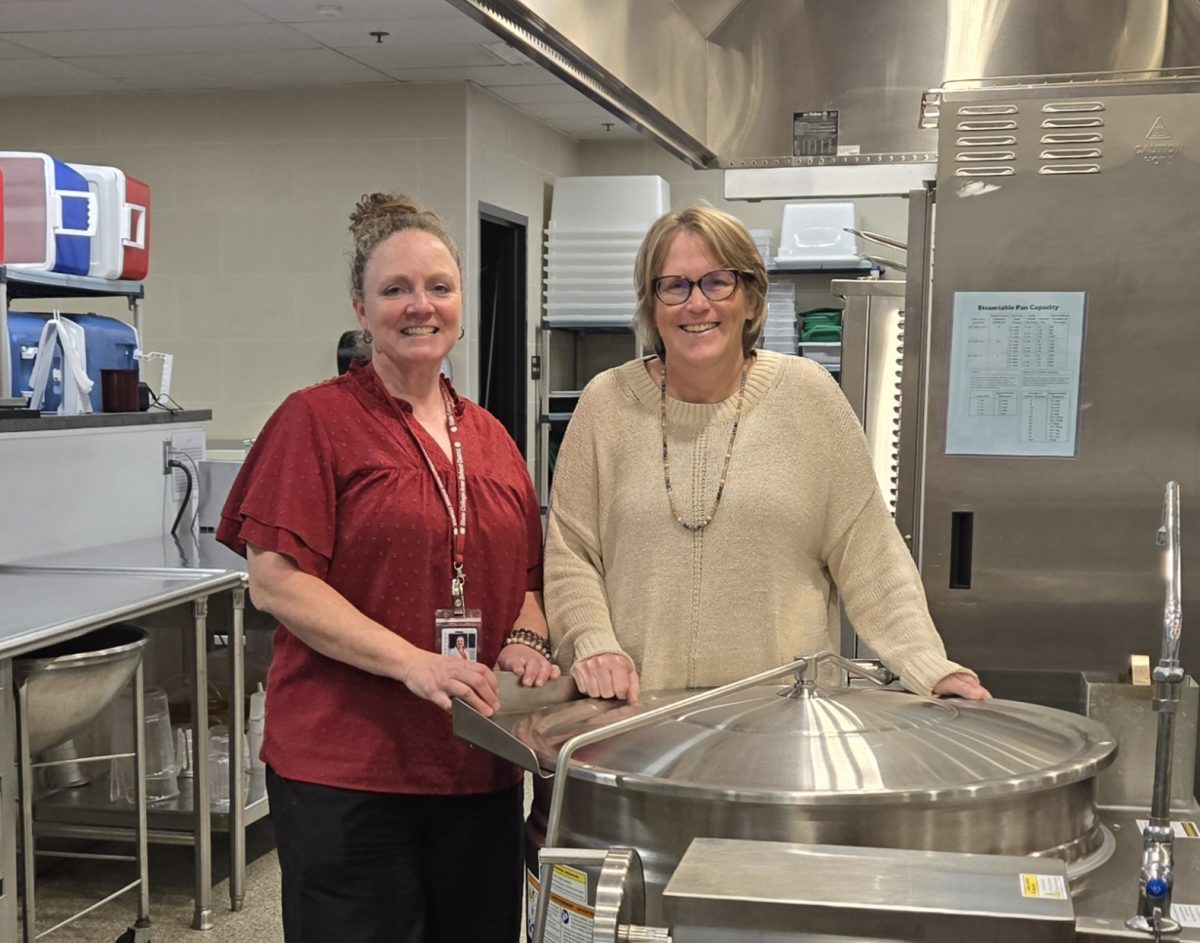
The high school’s food services department also offers pre-packaged breakfast and lunch entrees for fasting students to order and take home later.
“This school, compared to…other cases I’ve heard from other [exchange] students, is the perfect environment,” Chiyat said.
Aaron Moon, the school’s equity liaison, says those supports are intentional. His office sends district-wide communications at the start of Ramadan — which lasted this year from Tuesday, Feb. 17 through Thursday, March 19 — explaining what the month involves and why students observe it.
Moon estimates that more than 25 students at State High observe Ramadan, and that some non-Muslim students have even tried fasting this year out of curiosity.
“State High is predominantly known as the school that is trying to go the extra mile for our students…participating in religious practices,” Moon said, adding that most comparable accommodations are typically found only at the college level.
The school has also ensured that Eid al-Fitr — which falls on Friday, March 20 — is a day off, with staff working asynchronously to accommodate those who observe it.
Andrew Wilson, who teaches the social studies side of State High’s ESL program, said the goal behind it all is straightforward: “State College’s desire is to have every person here in this school, no matter their religious beliefs, feel that they are supported.”
Wilson acknowledged, though, that the accommodations work best when students approach them with the same seriousness they bring to academics, noting that the lunch spaces for fasting students have at times become social rather than academic, creating friction with other uses of the room.
“I’ve seen it done both really, really well,” Wilson said of balancing prayer time with academic responsibilities. “I’ve seen it done where it doesn’t work very well at all.”
The physical toll of fasting through a school day is real, even for veterans. Wilson calls it “hangry,” and Alptekinoglu agrees: “Sometimes if we act frustrated out of nowhere, it’s because we’re hangry.”
For Chiyat, the spiritual core of the month is what he wants most non-Muslim classmates to understand.
“Ramadan is not self-torture,” Chiyat said. “It’s more about empathizing with people and becoming more disciplined. You’re focused about life and material things all year long. You can take at least one month to just care about God and spirituality.”
Chiyat added that observing Ramadan far from family has made faith feel more conscious. “Here,” he said, “your faith is kind of challenged.”
For Moon, that challenge is why the work doesn’t end with the holiday. “It’s just representing and understanding everyone’s differences, and trying to make that a piece of everyday life versus just only doing it when the holidays come around.”
As Eid celebrations begin, both seniors know exactly what they’ll be reaching for to break the fast.
Chiyat’s personal favorite is Chebakia, a Moroccan pastry of fried dough dipped in honey and sprinkled with sesame seeds.
Alptekinoglu keeps it simple: “Dates, of course.”
Eid al-Fitr — which is marked by communal prayers, festive meals, and the giving of gifts — begins at sunset on Thursday, March 19, with official celebrations starting on Friday, March 20. The holiday typically lasts three days, carrying the spirit of Ramadan into the week ahead.