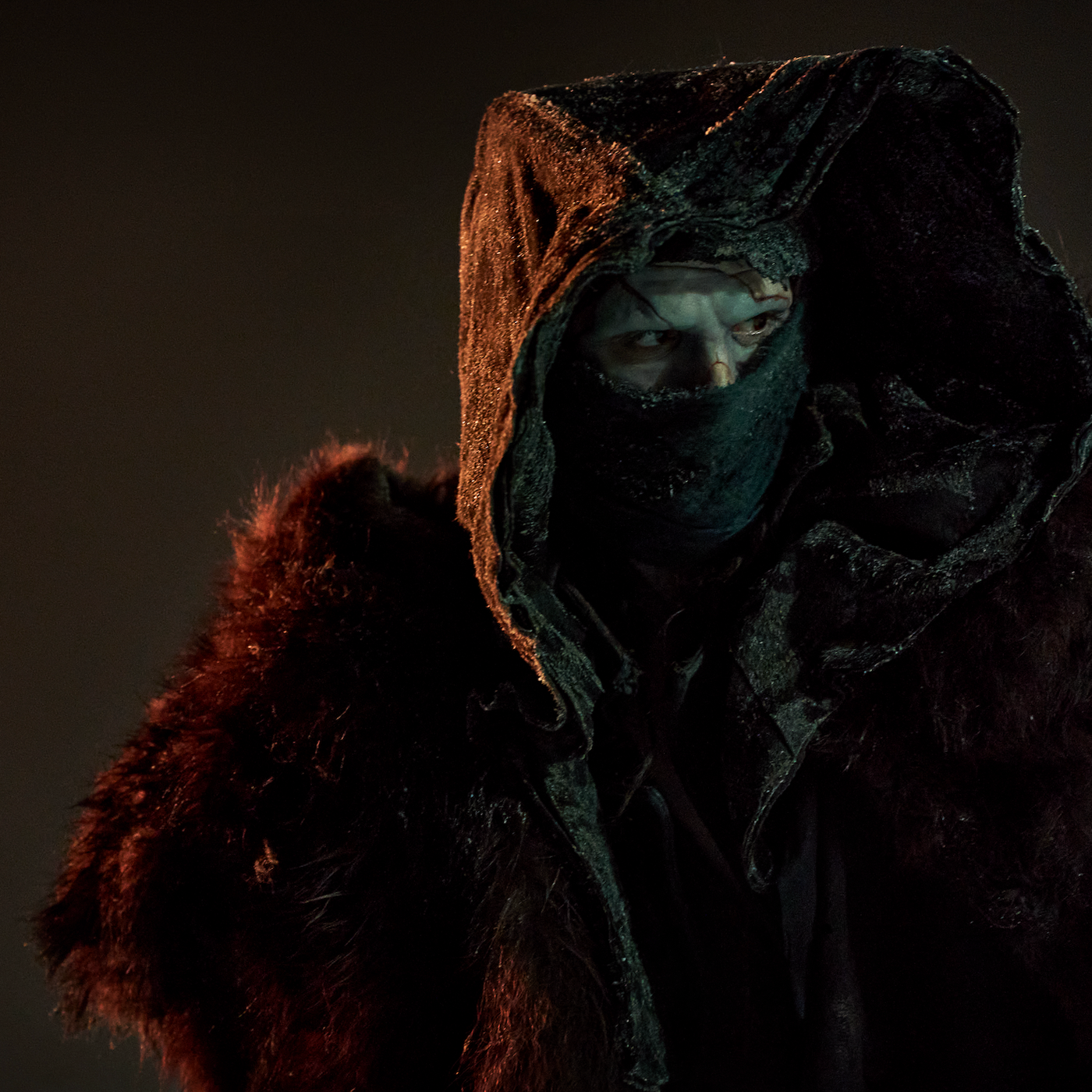
Director Guillermo del Toro’s long-anticipated “Frankenstein” arrived on Netflix on Friday, Nov. 7, marking one of the most talked about releases of the fall film season.
“It’s been super publicized, at least on my [Instagram] feed, because I’m very into cinema,” senior Hadley Milhomme said, capturing the buzz that has followed the film from Venice to the living rooms of millions.
Del Toro’s film, which he wrote and directed, is based on Mary Shelley’s classic novel Frankenstein; or, The Modern Prometheus (1818), and stars Oscar Isaac as Victor Frankenstein, Jacob Elordi as the Creature and Mia Goth in a dual performance as Victor’s mother and fiancée, with Christoph Waltz, Lars Mikkelsen and Charles Dance in supporting roles.
The film, which was released at the Venice International Film Festival on Aug. 30 to a 15-minute standing ovation, played a limited theatrical window in October before hitting Netflix last week.
The film has earned critical acclaim—Rotten Tomatoes reports 85% positive critic reviews, and 95% audience approval. Critics and audiences alike have praised the production’s lavish set design, “stunning” cinematography, and Elordi’s performance and prosthetic transformation, though many criticized Netflix’s limited theatrical release strategy.
FRANKENSTEIN IN THE CLASSROOM
For many students at State High, the story of Frankenstein is more than just another film—it’s an integral part of their curriculum.
When she heard about del Toro’s film, IB English Year 2 teacher Melissa Wager said, “We have to watch it.” Her IB seniors have read Shelley’s Frankenstein every fall for the last five years to study the concept of intertextuality, or the relationship between texts across mediums, an important pillar of the IB curriculum. It’s a tradition she is determined to continue even as the IB program is phased out.
“I think one of the reasons that I wanted to use it was because I think students are so unfamiliar with the original narrative,” Wager said. “And they based all their perceptions of the story from what they’ve seen on film and in other media.”
Many of those preconceptions come from Universal’s 1931 classic, which has often led many to confuse the “monster” with Frankenstein himself.
Wager says the book often shocks students who take the time to read it. “I like watching the kids be surprised by what they see in the book versus what they already know about the story,” Wager said. “It’s really relevant right now, especially with AI…the idea of scientific advancement and technology is not something that we usually read about in English classes.”
IB Film teacher Austin Van Allen’s senior class has spent the past two years studying del Toro’s work, pairing his films The Shape of Water and Pan’s Labyrinth with classic horror staples like 1931’s Frankenstein to teach the fundamentals of filmmaking.
“I would say there’s a lot to think about with the creation of [del Toro’s] films,” Van Allen said; the aspects range from color and set design to how “monsters” are framed and humanized.
The overlap between English and film is one of the reasons why the story matters so much. “There were a couple IB Film students who had also taken IB English who were like, ‘oh, it’s cool to be able to tackle both of them at the same time,’” Van Allen said. “That was kind of a happy accident.”
STUDENT ANTICIPATION
Excitement for the film runs through all grades and classes at State High. Sophomore Lily Malloy said the trailer’s visuals sold her.
“The special effects were very intriguing to me,” Malloy said. “It just looked very fun, exciting, and action-packed.”
Milhomme, who has read Frankenstein twice before, said she’s especially interested in how del Toro will “modernize it,” considering Shelley wrote the novel over 200 years ago.
Another senior, Via Helling, has studied Frankenstein in both IB Film and IB English and appreciates the deeper modes of comparison those classes have encouraged.
“I feel like the [1931] movie focuses on the monster’s story…and then the book was really cool, because you got to see Victor’s part of it,” she said. “It’ll be interesting to see how [del Toro] takes on that story…and makes it his own.”
Helling is also eager to see Jacob Elordi play the Creature. “I’ve been following Elordi for a while and I feel like it’ll be interesting to see him play the monster, just because that’s out of the realm of characters he usually plays,” she said.
WHERE TO WATCH
With Frankenstein now streaming, many students plan to watch it together. “I’ll probably watch it tonight, with my friends on Netflix…[we’ll] just have it on,” Milhomme said.
Wager said she wants “to continue to teach this book even after IB is no longer part of SCASD,” adding that she hopes students in her current IB English class watch the film and compare it to Shelley’s novel.
Van Allen was cautiously optimistic too, adding, “I’ll wait to reserve judgement until I see it,” but expects del Toro’s adaptation to provide rich material for his Advanced Cinema Arts class next year.
Whether you come to del Toro’s Frankenstein as a fan of the book, a student of film or someone scrolling past a trailer, State High’s response suggests that Shelley’s story about creation, ambition and the often-ambiguous line between humanity and monstrosity still finds ways to resonate today.
As Milhomme put it, “there’s good in things that can be scary,” and it’s that tension that keeps generations returning to the tale.
Guillermo del Toro’s Frankenstein is currently streaming on Netflix, rated R for “bloody violence and grisly images,” with a runtime of 2 hours, 29 mins.